
Mallt Williams – The Lady Who Saved Plaid Cymru
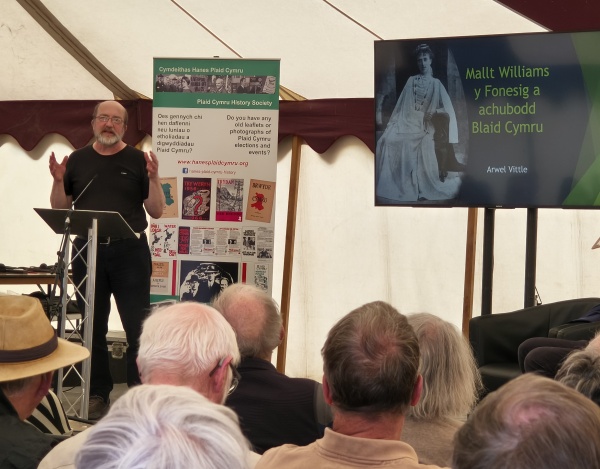
Translation of an address given by Arwel Vittle at the National Eisteddfod on 6 August 2026
Introduction
When Gwen Angharad Gruffudd and I set out to write a book on the establishment of Plaid Genedlaethol Cymru a year or two ago, we were both aware that there were previously untold stories about the contributions of some key individuals in the history of Plaid Cymru that had not received due attention. And – as is painfully common – many of these individuals were women.
As we delved into the history it became clear that various women had not been given due credit for their part in the founding of the Party. One of the most important – if not the most important – certainly in terms of Plaid Cymru’s survival as a viable party was Mallt Williams, the self-styled Lady of Llandudoch.
I am a big believer in acknowledging sources of research so before starting this talk today, I need to acknowledge and thank a number of people who helped me indirectly and directly in preparing the material.
Firstly, Marion Löffler, who led the way with her article ‘Mallt Williams – A Romantic Nationalist‘[1] and in her subsequent studies of early twentieth century Welsh cultural and political movements. I am also grateful to the local historian of this area, Hedd Ladd Lewis, for sharing his knowledge and research on Mallt and also his family connections with her through his grandmother. A word of thanks also to E. Wyn James, who prompted me to think more deeply about the contributions of women in the early history of Plaid Cymru and other stories that I will refer to in the course of this lecture. Finally – thanks to my co-author of Dros Gymru’n Gwlad, Gwen Angharad Gruffudd, who spent hours researching the archives and found treasures among Mallt Williams’ correspondence and her flamboyant writing!
Background
Alice Matilda Langland Williams, to give her baptismal name, was born in 1867, the daughter of a Breconshire doctor.
Looking at the archive it becomes clear that she had several names – and pseudonyms – there was Alice Matilda Williams, Alice Langland Williams, and Mallt Williams, and Lady Williams not to mention Mallt Merch Brychan. But she was most commonly known as Mallt, and we will refer to her as Mallt today.
Mallt grew up in a non-Welsh speaking household at Aberclydach House near Talybont-on-Usk. The family had a good reputation in the area and were reportedly of high-born descent, which according to Marion Löffler “certainly influenced Mallt’s perception of her role in Welsh society”. Her eldest brother, Howell Price Williams, rose to fame in 1910 as one of the first white men to travel across the African continent, and her second brother, William Retlaw Jefferson, was an editor of antiquarian magazines. It was however with her younger brother and sister, Frederick George and Cate ‘Gwenffreda’, that Mallt developed the closest relationship. As a young girl, through local family connections, she came under the influence of the cultural and social circle of Lady Llanofer, known as Gwenynen Gwent.
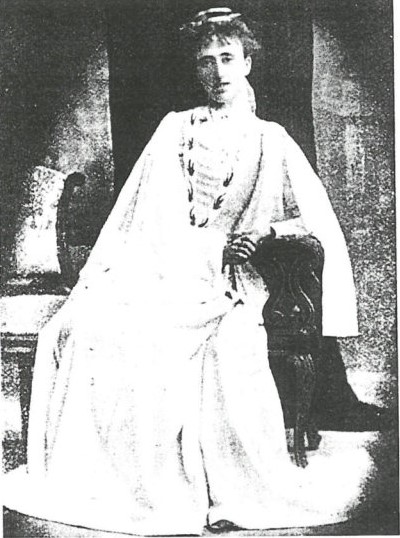
She was quite a character, photographed dressed as a thirteenth-century Welsh princess and was the author of historical novels set in romantic Celtic Wales. Mallt and her sister Gwenffreda were probably ‘Y Dau Wynne’, authors of two novels One of the Royal Celts, published in 1889, A Maid of Cymru: A Patriotic Romance, published in 1901.
Marion Löffler suggests that Mallt was the actual author of the second of these, A Maid of Cymru. The content of this novel is worth noting because it gives us a picture of the ideology and idealism of the young Mallt Williams.
The novel tells the story of Tangwystl Hywel, the heroine of A Maid of Cymru, who is a descendant of Brychan Brycheiniog and the daughter of the last “old house” in south-east Breconshire. She revives an eisteddfod in the area (presided over by the archdruid Hwfa Môn) and sponsors local poets. She refuses to marry the man she loves because he is part of the English industrial establishment that is destroying her area. Instead, she agrees to marry Hoel Cadwgan, who comes from an old Welsh lineage, on condition that he adopts the cause of Wales and the Welsh language. Under her guidance, Hoel relearns Welsh and comes to understand his part in the valley as a nobleman who treats his land according to the traditions of his country. Hoel Cadwgan’s wedding gift to Tangwystl is a building and a financial gift for a school harpists, but she dies before she can realise her dream. Her final message is to Hoel: “Gwasanaetha Gymru!” (“Serve Wales!”)
Myriad movements
The failure of Cymru Fydd, the movement within the British Liberal Party to win home rule for Wales, in 1896 was a heavy blow to the supporters of Wales and the Welsh language, and Welsh self-government receded as a political issue in the early twentieth century.
If Welsh identity was in retreat, one might think that the reverse was true when looking at the myriad movements established in the first decades of the twentieth century. Those years saw the creation of numerous Welsh cultural societies, guilds and groups.
Urdd y Delyn (Order of the Harp) was founded by O.M. Edwards in 1896. This was an early attempt to create a youth movement, which was eventually achieved by his son, Ifan ab Owen Edwards, when he founded Urdd Gobaith Cymru in 1922. Members of Urdd y Delyn would speak Welsh, learn about Welsh history, play the harp and sing Welsh folk songs and adhere to Welsh Christian ideals.
Among these movements was also Urdd y Ddraig Goch (Order of the Red Dragon) formed in 1902, with the aim of promoting the Welsh language, and trying to get parents among all strata of society to speak and nurture the language in their households; another group was Cymdeithas y Ddraig Goch (1902), which wanted to ‘support the wearing of clothes of Welsh material, and purchase of items made in Wales.
One common name among the founders of all these movements was lady Mallt Williams. Mallt was involved in most of these movements and societies in some way or another. O.M. Edwards, for example, said that Mallt was mainly responsible for the establishment of Urdd y Delyn.
Mallt’s main concern was the survival of the Welsh language, and she wanted to realise her dream of seeing a Welsh speaking Wales, and placed a great responsibility for that on the mothers of Wales. But the nobility had also turned their backs on the language and a new generation of nobles was needed to make up for those failures.
She expressed this in an article entitled ‘Welsh Women’s Mission in the Twentieth Century’.
The mothers of the Boneddigion, with their great social advantages,
should lead the way with nurseries where the nurses would be Welshspeaking, where Welsh toys and picture books would find an honoured place, and national emblems, mottoes arid flags adorn the walls and school-rooms…
Long before Urdd y Delyn ended, Mallt and Gwyneth Vaughan, the Anglo-Welsh novelist, had founded another society, Undeb y Ddraig Goch (Union of the Red Dragon). The aim of this association was to help in the work of making Wales ‘more Celtic and consequently more beautiful’. This Union had a constitution ‘designed with a view to enable Boneddigion and Gwerin alike to join in.’ Between 1901 and 1914, Undeb y Ddraig Goch held public meetings and established branches in Cardiff, Swansea, Aberystwyth and Bangor. Mallt became secretary to the Union in 1903, and was relentless in her efforts to attract patrons and supporters, among them Principal John Rhŷs of Jesus College, Oxford, Owen Rhoscomyl and the Howells of Nanteos.
Another young people’s organisation created by Mallt was the Byddin Cymru (Army of Wales), and on the pages of Cymru’r Plant from 1911 onwards she ran a group called the Ysbiwyr y Frenhines (The Queen’s Spies) in the Army, a group of young people who pledged to serve Wales with their hearts, minds, tongues and hands. Despite the sinister name, the Queen in question in the melodramatic title was the Welsh language. Her ‘spies’ organised ceremonies and romantic rallies, where new members would receive red dragon flags, with a recommendation that they wear a green shirt and a red scarf at the events.
Supporting the Union of Welsh Societies
Ultimately, Mallt Williams’s greatest contribution to Welsh cultural and political nationalism may have been financial. From the turn of the century onward, he gave generously to societies and organizations throughout the country. One of these was Undeb y Cymdeithasau Cymraeg (Union of Welsh Societies), the most important of the cultural nationalism movements in this period. It came into existence in 1913 when it was seen that the numerous cultural groups needed a united voice.
There was a general feeling that Welsh language and culture was losing ground. Welsh chapels were turning to using English, and complaints were heard that Welsh children no longer understood the language of their parents, t sales of Welsh books and periodicals had fallen sharply since the 1890s and many felt that Welsh was no longer the language of public life. To a large extent, therefore, the formation of the various societies was a response to the growth in Englishness.
The result of all this was the formal establishment of Undeb y Cymdeithasau Cymraeg in November 1913. OM Edwards was elected president and Arthen Evans general secretary. OM was later succeeded as president by ET John, the politician and industrialist who was very supportive of efforts to spread Welsh and Celtic identity and movements to resurrect the idea of self-government for Wales.
According to the constitution of the Union of Welsh Societies, its objectives were:
- To be a medium for consultation and co-operation between Welsh Societies.
- To sponsor the Welsh language and its culture, and to ensure that they have their due place in all circles of Welsh life.
- To cultivate the national spirit, and to resist all movements that oppose that.
Mallt supported the Union of Welsh Societies both practically and materially and was a vice president of the Union. But Mallt for all her support probably agreed with various other younger nationalists such as HR Jones, Lewis Valentine and DJ Williams that the Union was lacking in political engagement.
DJ Williams expressed his frustration with the Union’s lack of political nous in a letter to Ambrose Bebb in 1924 referring to it as the ‘Royal Standbacks of the Union of Welsh Societies’.
Celtic Links
Mallt and her brother and sister were also very interested in relations with other Celtic countries.
From the 1890s onwards up to the Great War, Mallt and her brother and sister attended the Pan-Celtic Congress, and then after the war when the Celtic Congress was re-established in 1917 they were among its preeminent enthusiasts and supporters. All three travelled to Scotland, Brittany and Ireland attending the Mod in the Scottish Highlands and the Gaelic League’s Oireachtas.
She also got to know the Breton patriot and poet Taldir.
François Jaffrennou’s bardic name was Taldir ab Hernin. He was an editor and Breton nationalist and active in the Pan-Celtic movement. He wrote mainly in Breton and published several volumes of poetry. Taldir founded the Gorsedd of Brittany and translated ‘Hen Wlad fy Nhadau’ into Breton – ‘Bro Gozh ma Zadoú’, which became the national anthem of Brittany.
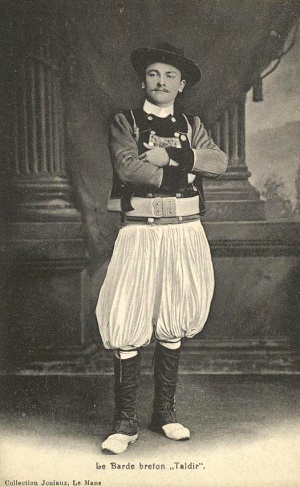
Mallt and her sister Gwenffreda are referred to in the poem ‘An Diou Vag’ composed by Taldir after his visit to the Cardiff National Eisteddfod in 1899, and published in Gwerziou gant Abherve ha Taldir in the same year.
Over the next few years the Celtic Congress would meet annually in Edinburgh, Bangor, the Isle of Man, Brittany and Dublin. A prominent figure in the Congress was Agnes O’Farrelly of the Gaelic League. She was president of the first meeting of the Irish Volunteers’ women’s section, Cumann na mBan, and was a close friend of Roger Casement who was executed by Britain on a charge of treason for his part in the Easter Rising in 1916. Moreover, a number of prominent Irish language supporters and activists supported the Congress, including Douglas Hyde, the first President of the Irish Free State and one of the pioneers of the Irish renaissance at the turn of the century. And in the midst of all this, with her financial support for the Congress and her great enthusiasm, Mallt Williams was full of encouragement to any movement that wanted to promote the cause of Wales and the Welsh language.
So she was very interested in making connections with all the Celtic countries. But Ireland was the biggest influence by far.
Significance of Ireland
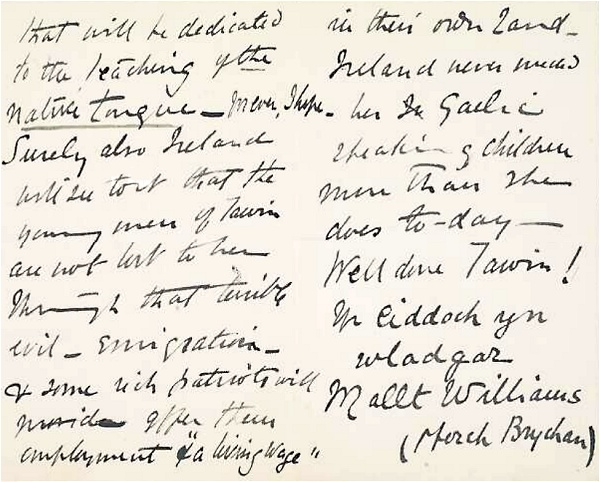
In 1904 she wrote to Padraig Pearse, the nationalist and campaigner for the Irish language, congratulating him on the establishment of the Irish School on Isle of Tawin in County Galway, adding that she hoped that more Irish sons would not need to emigrate to earn a living, ‘Ireland never needed her Gaelic speaking children more than she does today’.
The history of Tawin School is interesting in terms of the link between the Irish language movement and the wider political republican movement.
Roger Casement was an Irish human rights activist and nationalist and a great supporter of the Celtic Congress, and as mentioned previously, he was hanged by the British Government in 1916 for his part in the Easter Rising. Casement visited Tawin in 1904 to support parents on the island who had withdrawn their children from the island’s national school in protest that they were not being taught Irish. The islanders raised enough money for to build their own Irish-medium school. Padraig Pearse, another of Ireland’s most prominent nationalists, was also extremely supportive of their cause through the Gaelic League, and the school building was also used during the summer holidays as a Gaelic college. This was not the only link between the Tawin school and the national movement in Ireland, as Eamon de Valera spent three summers on Tawin as Director of the Gaelic League Summer School from 1911-13. He later took part in the Easter Rising, and was a political leader in the War of Independence and subsequently became Taoiseach of the Irish Republic.
Mallt was a regular visitor to Ireland and many of her letters are written on the paper of the grandest hotels in Dublin. She travelled over the Irish Sea even during turbulent times such as the months after the Easter rising in 1916. When negotiations were held on an agreement to end the Irish War of Independence in 1921 Mallt expressed her utter disdain for David Lloyd George, the erstwhile hero of Cymru Fydd, but who was now British prime minister and leading negotiations with Sinn Féin and the leaders of the IRA.
Mallt stated that she was familiar with some of the leaders of the republican movement in Ireland and that they were also of the same opinion:
I know some of the Leaders. All the Patriots (I think) can’t trust L.G. He’s never been a friend of Ireland.
The history of the Tawin school struggle shows the clear link between the language movement in Ireland and the political movement for independence. And, like many other Welsh nationalists at the time, this had a strong influence on Mallt Williams’ political thinking. She now thought that the way to preserve the Welsh language was by gaining political power and freedom for Wales. And her views would find expression in writing – and more importantly – materially through her financial contributions to political nationalism that would continue for the rest of her life.
Death of Gwenffreda and move to Pantsaeson
In 1914, Mallt’s sister, Gwenffreda, died. OM Edwards’s comments in Cymru’r Plant show how much of a personal blow it was for Mallt to lose someone who was on the same wavelength as her in so many ways.
Some years prior Mallt had moved from Brecon to the Llanarthne area of Carmarthenshire, but shortly after her sister’s death her brother Frederick bought Plas Pantsaeson between Moylgrove and St Dogmaels in Pembrokeshire, and Mallt was invited to live there with him and his wife.
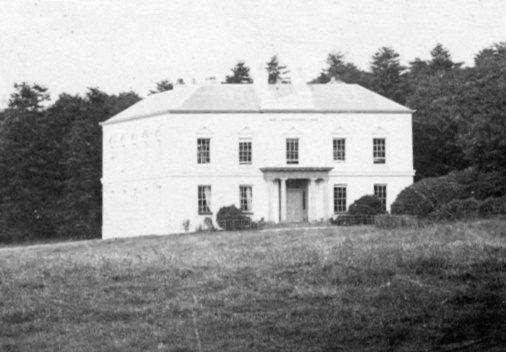
From then on, Mallt along with Frederick and his wife and children lived their dream as a distinctive Welsh gentry in their mansion in north Pembrokeshire.
Mallt lived a very frugal life and was an extremely disciplined vegetarian and follower of the Christian Scientists, who believe that healing comes through prayer and spiritual understanding rather than medicine.
Supporting the new Welsh Nationalist Party
In 1925 the aspirations of a new generation of nationalists led by individuals such as Saunders Lewis, Lewis Valentine and HR Jones came to fruition and the emergence of national movements north and south were united to form a Welsh Nationalist Party – Plaid Genedlaethol Cymru.
From the outset, Mallt was unwavering in her support for the new Party.
HR Jones, the new party’s organiser, had also been an organiser of Undeb y Cymdeithasau Cymraeg, and probably knew Mallt through this connection. It was no surprise then that one of his first steps, was to contact Mallt and invite her to become one of the vice-presidents along with Saunders Lewis and Meuryn, editor of Yr Herald Gymraeg.
It is interesting to see her name on the list of officials as the Vice President of Plaid Genedlaethol Cymru. As we have seen, Mallt had been involved in countless Welsh societies since the beginning of the century, and would have been enthused by any organisation that campaigned for a measure of political autonomy for Wales. It was therefore natural for her to be extremely supportive of any attempt to establish an independent national party, and as one of the few people who had the financial means to support these efforts, her support would be key to securing the future of the new party.
She was pleased to accept HR’s invitation and considered it a great honour. Her response reveals the emphasis she placed on Wales turning its back on England and strengthening links with the other Celtic nations, and also her emphasis on giving the Welsh language a central place:
Wales is indeed standing at the crossroads.
- We must turn our eyes away from London.
2) We must make Welsh compulsory in all schools, from Holyhead to Cardiff (as the English language is now)
3) We must follow the national movements in the other countries, and exchange ideas with the Irish and the Bretons and the Scots.
She was pleased to hear of the new party’s intention to distribute thousands of pamphlets and send speakers across Wales to spread the message. To that end, she offered to pay for the printing of leaflets similar to those published by the Scottish National League, urging HR not to publish long and lengthy leaflets – ‘they should be short and to the point’, she asserted. (Indispensable comms advice for political parties in every age!).
In another letter to the organiser, Mallt appealed to HR’s desire to see the names of towns and villages changed to Welsh versions, this was sure to receive a warm welcome from the party organiser, particularly given HR’s role in changing the name of his home village from Ebenezer to Deiniolen. Mallt urged the Blaid Genedlaethol to encourage Holyhead Council to follow the example of Kingstown Council in Ireland that had recently changed the name of the port town to Dun Laoghaire.
Through the Celtic Congress, Mallt facilitated links with the national movement in Ireland. In addition, she urged HR, who had drawn great inspiration from the struggle of the Irish, to visit the Emerald Isle, offering to pay part of his travel expenses there. Nevertheless, she considered the Anglo-Irish Treaty, which meant dividing the island into North and South and keeping an oath of allegiance to the king, as a betrayal of the republican cause:
You should go to Ireland, in 1926, to study the Republican idea there. I shall be content to give a present of five pounds, towards your expenses there, and to give you a letter of introduction. I cannot write about the latest betrayal. It’s too terrible. Poor Ireland!
Indispensable Support
A quick glance at the names of the party’s financial contributors in its first year shows that. Mallt Williams is the most generous contributor of all, giving £50, which today amounts to £4,000. In comparison, Lewis Valentine contributed £1 – although that was a generous contribution for someone on a Baptist minister’s salary in the 1920s!
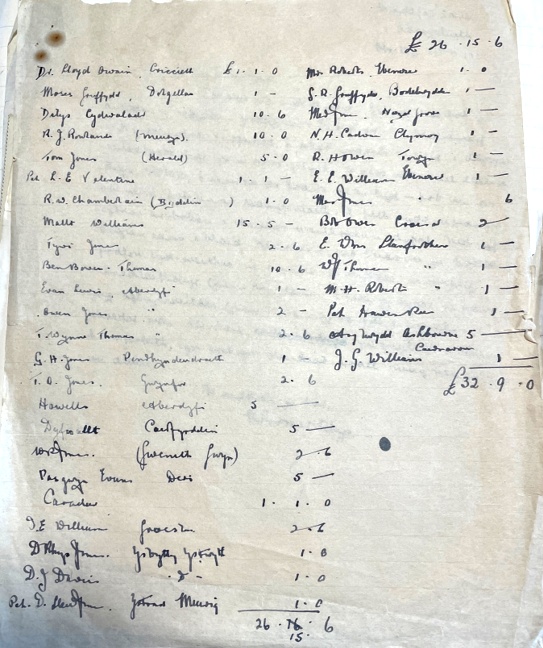
Second on the list in terms of generosity is Lord Ashbourne, a supporter of the Irish language society, Conradh na Gailege, and patron of one of Ireland’s premier jewels in camogie, a version of the Irish sport of hurling for girls. By virtue of the various connections, therefore, a trip was arranged for HR Jones and a number of other Welsh nationalists to visit the country and to meet various leading figures of the republican movement there.
There is no doubt, however, that Y Ddraig Goch, the party’r journal, would not have seen the light of day, and that the Party would not have survived the early years without financial support. The key sponsor in this again was Mallt Williams. She contributed £40 to the newspaper’s production costs, a significant amount in the period equivalent to £3,000 today.
She boosted Plaid Cymru’s finances by donating hundreds of pounds over a number of years, and promoted the circulation of Y Ddraig Goch by buying between 20 and 400 copies a month for her own distribution. It would not be an exaggeration to say that if it were not for her financial support, Plaid Genedlaethol Cymru would not have continued. Indeed, Saunders Lewis believed that her donations saved the movement.
Campaigning advice
She declined, however, an invitation to chair a session at Plaid’s first summer school at Machynlleth in 1926, because she felt her spoken Welsh was not good enough.
And despite being subsequently invited on several occasions to speak at the party’s Summer Schools she declined. Notwithstanding her unflinching support for the national party, living in isolation coincided with Mallt’s growing desire to withdraw from the public stage. Evidence of this is that she published her articles and letters in Y Ddraig Goch and the Welsh Nationalist, often under pseudonyms such as Tangwystl, Merch Brychan or Gwyliwr.
But regardless of her public shyness she offered a flurry of advice to the movement in regular correspondence.
The working class had to be won, in her opinion – ‘No hope for the future, if you (Plaid Genedlaethol Cymru) can’t change the minds of the People.’ She wanted Plaid Cymru to prioritise gaining ground in Glamorganshire:
We must win this county (the largest, and the most populous in Wales)… To strive there, the Plaid must practise the language of the alien (woe to me! and with a lot of Welsh, too) as the Gaelic League, does in the English parts of Ireland. Win them over to nationalism first, and it will be easier to win them over to the Welsh language.
Mallt was also keen for Plaid Genedlaethol Cymru to broaden its appeal by setting up an English-language magazine to ‘awaken the Anglo-Welsh’.
The content of her letters – brief and in dramatic handwriting – reveal a colourful character, espousing anti-imperialist nationalism. She was sympathetic to the national movement that was beginning to gain strength in India under the leadership of Mohandas Gandhi, and was a regular visitor to Ireland, and had forged close ties there with the language movement and prominent republicans. As a result, she pressed the leadership of Plaid Genedlaethol Cymru to liaise with organisations in both Ireland and Scotland. They needed to be enlightened, says Mallt, about the struggle in Wales: ‘People in the other countries don’t know anything about Plaid.’
She also lamented the role of women in the national struggle. She wrote to HR in November 1925 regretting the apolitical nature of Welsh women:
I saw that there was a Women’s Meeting of the Labour Movement (in Caernarfon) the day before. How can PGC win Welsh women to the language? At present they are on their knees before the English, much worse than Welsh men. In Ireland the women are more political than the men.
Support for local causes and WC Elvet Thomas’ visit to Plas Pantsaeson
Despite her generous donations and frequent correspondence, Mallt was unknown to many of the party’s grassroots leaders and members. JE Jones says
… although I corresponded with her hundreds of times, I only saw her once – at Cardiff station an elderly but lively lady in old-fashioned clothes.
More memorable is another description of her that appeared in Baner ac Amserau Cymru, where WC Elvet Thomas is quoted as accompanying a group of Urdd boys on a pilgrimage to St Davids but who decided to drop by Pantsaeson to meet the famous Lady.
Before mentioning the visit, it’s worth saying a quick word in passing about WC Elvet Thomas.
He was born in Fishguard but the family moved to Cardiff when he was a child. He later became an inspirational Welsh teacher at Cathays High School for Boys for forty years and instilled a love of the Welsh language and its culture among various pupils at Cathays School, including Bobi Jones, Edward Millward and Geraint Jarman.[2]
There is a reference to a pivotal event in Elvet Thomas’ life in one of Geraint Jarman’s songs, ‘Strydoedd Cul Pontcanna’ (‘Narrow Streets of Pontcanna’), where he speaks of ‘the slap of growing up a Welshman’.
The background to this is an incident that happened to the young Elvet Thomas when he was an eight-year-old boy playing in the street in Canton with his younger brother. A woman came up to the boys and asked: ‘Were you two talking Welsh?’ ‘Yes’, he answered. ‘Well, take that!’ she said; and gave him a hard slap across his cheek, and walked away. But the slap had a contrary effect to that intended, because as Thomas says in his autobiography, “indeed she had taught me a lesson. From that day forth, I knew that the Welsh language had enemies.” Elvet Thomas grew up to be a committed Welsh patriot and champion of the Welsh language in Cardiff.
But to return to Mallt Williams, here is the story of the visit to Plas Pantsaeson by the young nationalists, in the words of Elvet Thomas himself:
When I and some of the Urdd boys were on a pilgrimage to St Davids in 1940 we stayed one night in the village of St Dogmaels. The next day, on the road from St Dogmaels to Fishguard, it was decided to call at Plas Pant y Saeson to pay tribute to Lady Mallt. Having arrived at the mansion and conveyed our message to the maid, the Lady’s sister-in-law came to the door. We were told that there was a possibility that we could see the Lady.
We were invited in.
We were very surprised to see how strange and cold the place was. On a table near the front door was an old harp similar to the Scottish ‘clarsagh’, and a card tied to the harp saying that the harp was the property of some Irish king. We were put to sit in a spacious room to await the arrival of the Lady.
We felt that we were waiting for the arrival of a queen.
At last she entered – a comparatively small and thin woman, very frail in appearance.
It seemed to me that she was very aware of her appearance.
She was extremely shy. She rushed towards us to greet us with the words ‘Henffych well, croesaw i’r unig blas Cymraeg yn sir Penfro.’ (‘Welcome to the only Welsh mansion in Pembrokeshire’)
Her dress was very odd. She wore a long white dress down to her feet, the robe fringed with green and red (Welsh colours). On her head she wore a red felt hat tied with a green ribbon under her chin and a green feather in the hat… She was of ‘noble blood’. Wales and the Celtic nations were her main interest. She felt it was her “privilege and duty as one of high status to elevate Wales.”
Her Welsh was very fragmented but would on no account turn to English. It was sometimes difficult to understand her Welsh, but she stuck resolutely to Welsh, and she cared that everyone around her spoke the language. She loved Wales and the Welsh language passionately. And was very generous in spirit, but expected respect in return, as was proper for a lady. Her last words to us when we were leaving were ‘Yn iach y boch’.
The maid in this story was probably Louvain Ladd – grandmother of
Hedd Ladd Lewis, local historian of this area. Louvain was employed by Mallt
in Pantsaeson and thought highly of the lady.[3]
Mallt was a source of constant advice to her maid. One notable piece of advice can be found in a note Louvain received from Mallt on the occasion of her marriage to Charles Ladd, in which Mallt wishes the married couple ‘health and long life and goodness’ in their new life, and for them to “fear God and to love Wales and the Welsh language”. She concludes with a piece of health and nutritional advice saying that Charles should remember that there is not a single young woman in St Dogmaels who can bake vegetables as well as Louvain, “in their own juices, with their vitamins preserved and not thrown away”.
It is also said that at the time of the Second World War Mallt, as she was a vegetarian, had no use for the meat coupons she received, and so distributed her coupons among some of the most needy families in the area, especially those with relatives fighting in the war.
She generously supported local events, sponsored local eisteddfodau and was a generous and considerate employer.
Her support to the Party and its members also extended to the personal. She gave HR Jones health advice in the face of his physical weakness, recommending that he should drink lemon juice in hot or cold water every night. There was a remarkable power in a lemon that makes a weak body healthy, she claimed. But when this did nothing to improve HR’s health, she paid for a voyage for him to the Mediterranean area in 1927 in another generous effort to improve the Party organiser’s health.
The Eagle Tower, the Bombing School and Protecting the Preseli
Throughout the years, until her death in 1950, Mallt continued to support the Party financially and in private and public correspondence.
A more unusual contribution to the party was her donation in the spring of 1932.
The cause of the donation was the Blaid Genedlaethol’s first act of direct action, which in several respects preceded the more serious action at Penyberth four years later. The background is that the British Government’s Ministry of Works refused permission to fly the Red Dragon flag alongside the Union Jack on St David’s Day. It was decided to organise a symbolic act of protest by Party members to draw attention to the injustice. It was arranged for four Plaid members – JE Jones, WRP George, EV Stanley Jones and Wil Roberts – to climb the steps of the Eagle Tower at Caernarfon Castle and take down the Union Jack flag and raise the Red Dragon in its place, stapling the ropes at the pole.
The giant Red Dragon which replaced the Union Jack at Caernarfon Castle was a gift from Mallt Williams, who supported the action wholeheartedly.
Indeed, she was responsible for coining the term ‘Bombing School’ to describe the proposed Air Force camp at Penyberth – the cause of the Blaid Genedlaethol’s most notable direct action campaign in 1936, when the huts on the site were burned down and Lewis Valentine, Saunders Lewis and DJ Williams were imprisoned for nine months as a result.
JE Jones, Plaid Cymru’s Secretary at the time, said:
one day I received a postcard from Lady Mallt Williams expressing her support ‘for your campaign against the establishment of a Bombing School in Llŷn’.
And that, says JE, was how the term was adopted to describe the War Office’s plan at Penyberth.
That is not Mallt’s only contribution to opposing the establishment of army camps on Welsh soil and in Welsh speaking communities.
Many of you will be familiar with the history of the Battle of the Preseli after World War II.
At that time in 1947, 200 families in the Welsh communities of north Pembrokeshire were at risk of being evicted from their homes in the Preseli mountains to make way for a military training ground after the Second World War under Clement Atlee’s Labour government. The campaigners of north Pembrokeshire, led by radical and resolute non-conformist ministers such as Joseph James and Parri Roberts were able to win that battle and protect the Welsh language community there.
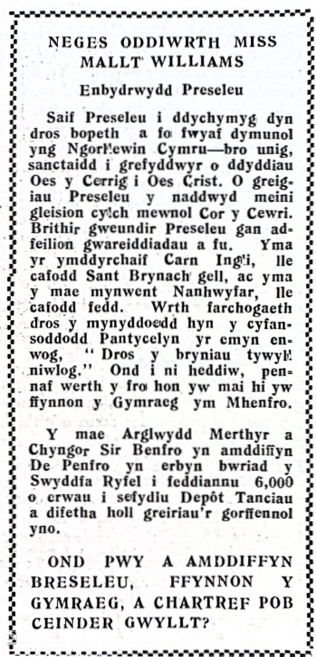
But a fact that is perhaps not so well known is that the War Office had been eyeing the Preseli as a tank training ground for nearly a decade. Because Mallt Williams published an open appeal in Y Ddraig Goch in 1938 asking for support to stop the intention to turn the mountains into a tank depot. Her appeal is worth quoting in full:
Preselau Urgency
Preselau stands to the imagination of man over all that is most desirable in West Wales – a lonely, sacred and religious land from the Stone Age to the Age of Christ. The bluestones of the inner circle of Stonehenge were carved from the rocks of Preselau.
The moorland of Preselau is dotted with the ruins of former civilisations. Here is the burial place of Carn Ingli, where St Brynach had a cell, and here is the cemetery of Nanhwyfar, where she was buried. It was while riding over these mountains that Pantycelyn composed the famous hymn “Dros y bryniau tywyll niwlog.”
But for us today, the main value of this area is that it is the wellspring of the Welsh language in Pembrokeshire.
Lord Merthyr and Pembrokeshire County Council are defending South Pembrokeshire against the War Office’s intention to occupy 6,000 acres to establish a Tank Depot and destroy all the relics of the past there.
BUT WHO WILL DEFEND THE PRESELAU, THE WELLSPRING OF THE WELSH LANGUAGE, AND THE HOME OF ALL WILD ELEGANCE?
Death in October 1950
Her beloved brother Fredrick died in 1945, and just 5 years later Mallt herself died in October 1950, at the age of 83. Her body was cremated in Pontypridd, and her ashes scattered in Llansantffraid cemetery, Breconshire.
In his tribute after her death, Plaid Cymru’s president at the time, Gwynfor Evans, was extremely appreciative of her contribution:
One cannot think of her without remembering, and remembering with deep gratitude, her generous and consistent support of the movement throughout the years.
Saunders Lewis also believed that the movement would not have survived the early years without her donations. It would not be an exaggeration to say, to concur with his view, that she saved the party.
Back in 1936, JE Jones wrote to her expressing gratitude for the generosity of her contribution to the party’s St David’s Day Fund, and his words sum up the extent of Plaid Cymru’s debt to Mallt Williams:
…we as a Party owe you more than words can express; as does Wales. I cannot but hope that our work here in the Blaid is worthy of as generous a support as yours, and that Wales will soon be a free nation, a nation with self-respect, a happy and successful nation. When that day comes, your support in the early days of the Nationalist Party will have made that possible.
Mallt was, in the words of Marion Löffler, a romantic nationalist, but she was also through her political advice and crucial financial donations a practical nationalist who turned her words into action. And as Plaid Cymru takes up the reins of government for the first time in Wales it is very appropriate for us to remember, at the National Eisteddfod in her adopted county, the indispensable contribution of Mallt Williams, Lady of Llandudoch to the cause of Wales and the Welsh language.
[1] See Marion Löffler’s indispensable article, ‘A Romantic Nationalist: The Life of Mallt Williams’, Planet, 121 (February/March 1997), 58–66
[2] W. C. Elvet Thomas, Tyfu’n Gymro (Gwasg Gomer, 1972). The story of ‘The Slap’ along with the contribution of WC Elvet Thomas to Welsh life in Cardiff can also be found in E Wyn James’ inormative article in Y Dinesydd, June 2020, available at https://orca.cardiff.ac.uk/id/eprint/132371/1/%27Canlyniad%20y%20Slap%27%2C%20Colofn%20%27Llys%20a%20Llan%27%2C%20Y%20Dinesydd%2C%20Mehefin%202020.pdf
[3] I am very indebted to Hedd Ladd Lewis for sharing details of his family connections with Plas Pantsaeson, along with his extensive knowledge of Mallt’s life and ideas locally and beyond, as well as the photograph of Plas Pantsaeson included in this presentation.