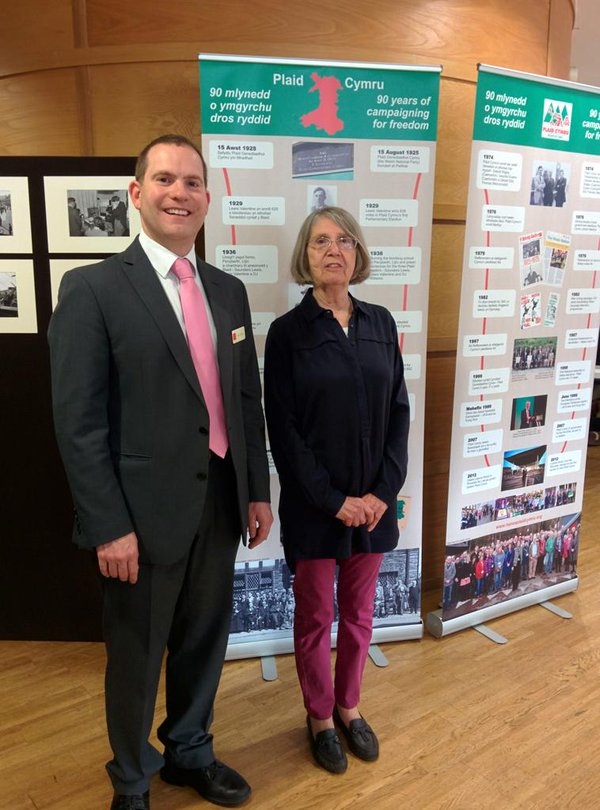
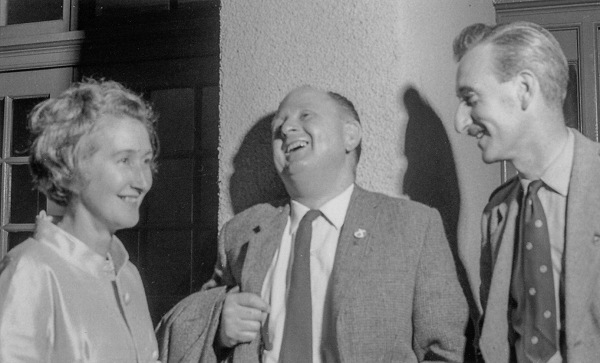
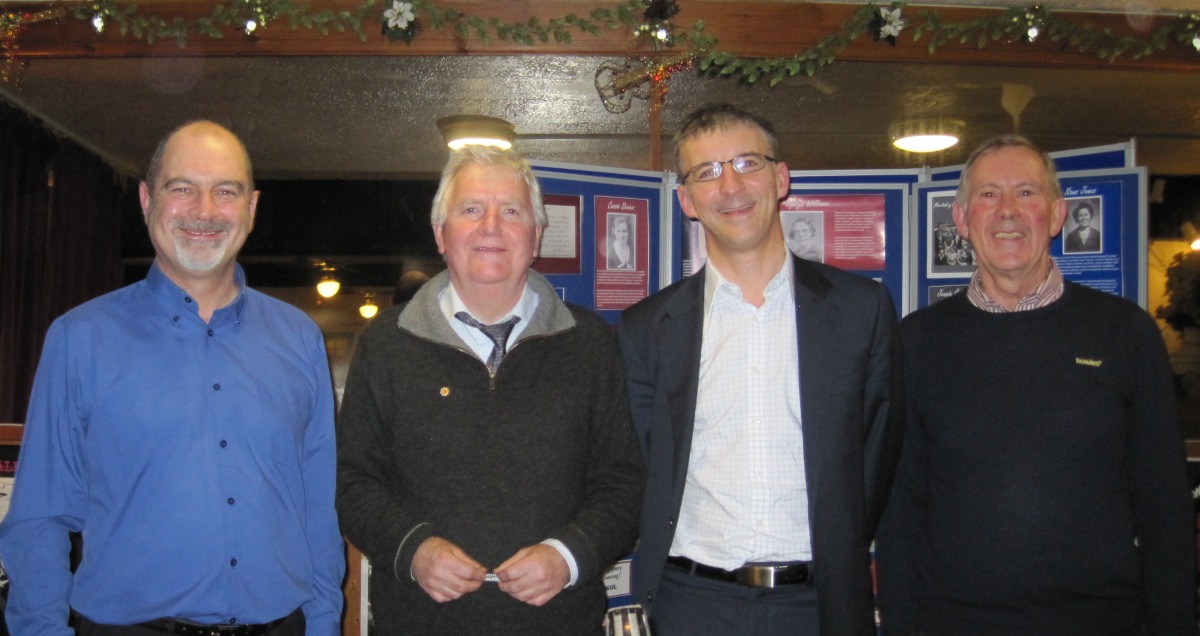
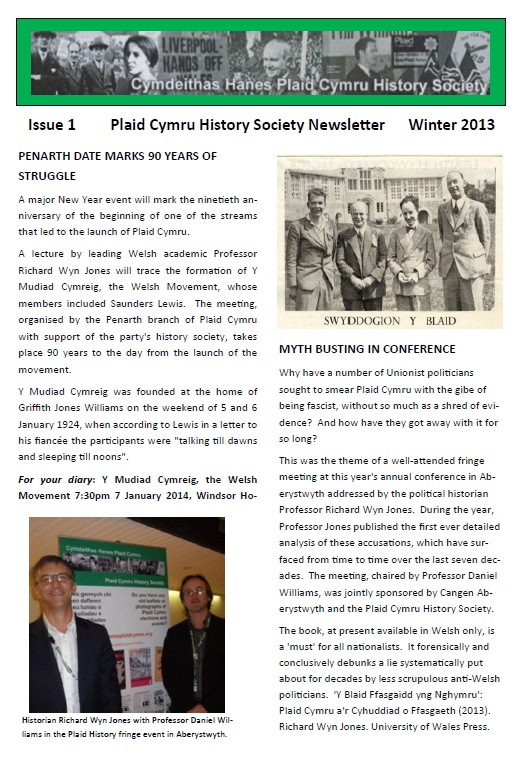
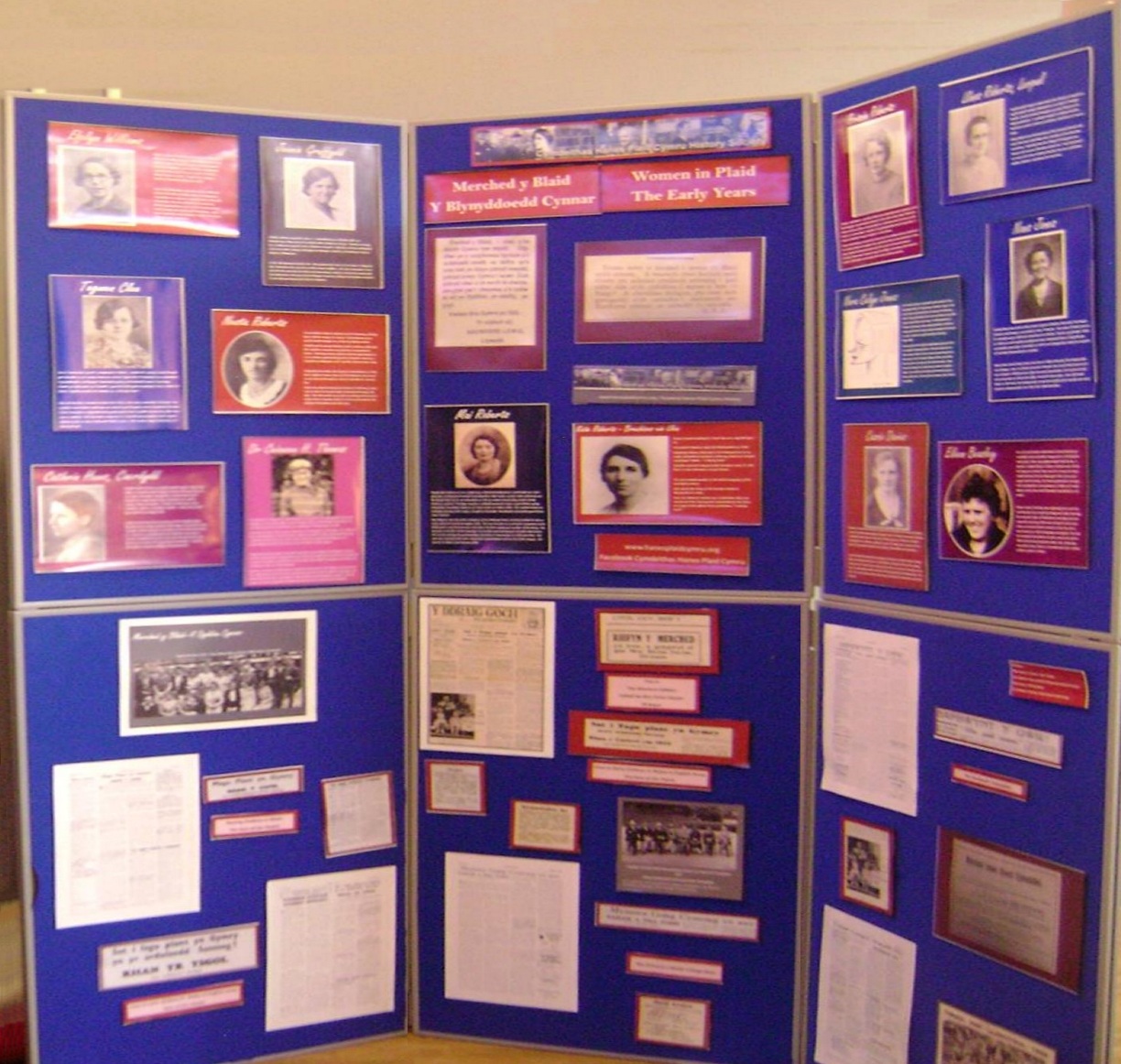
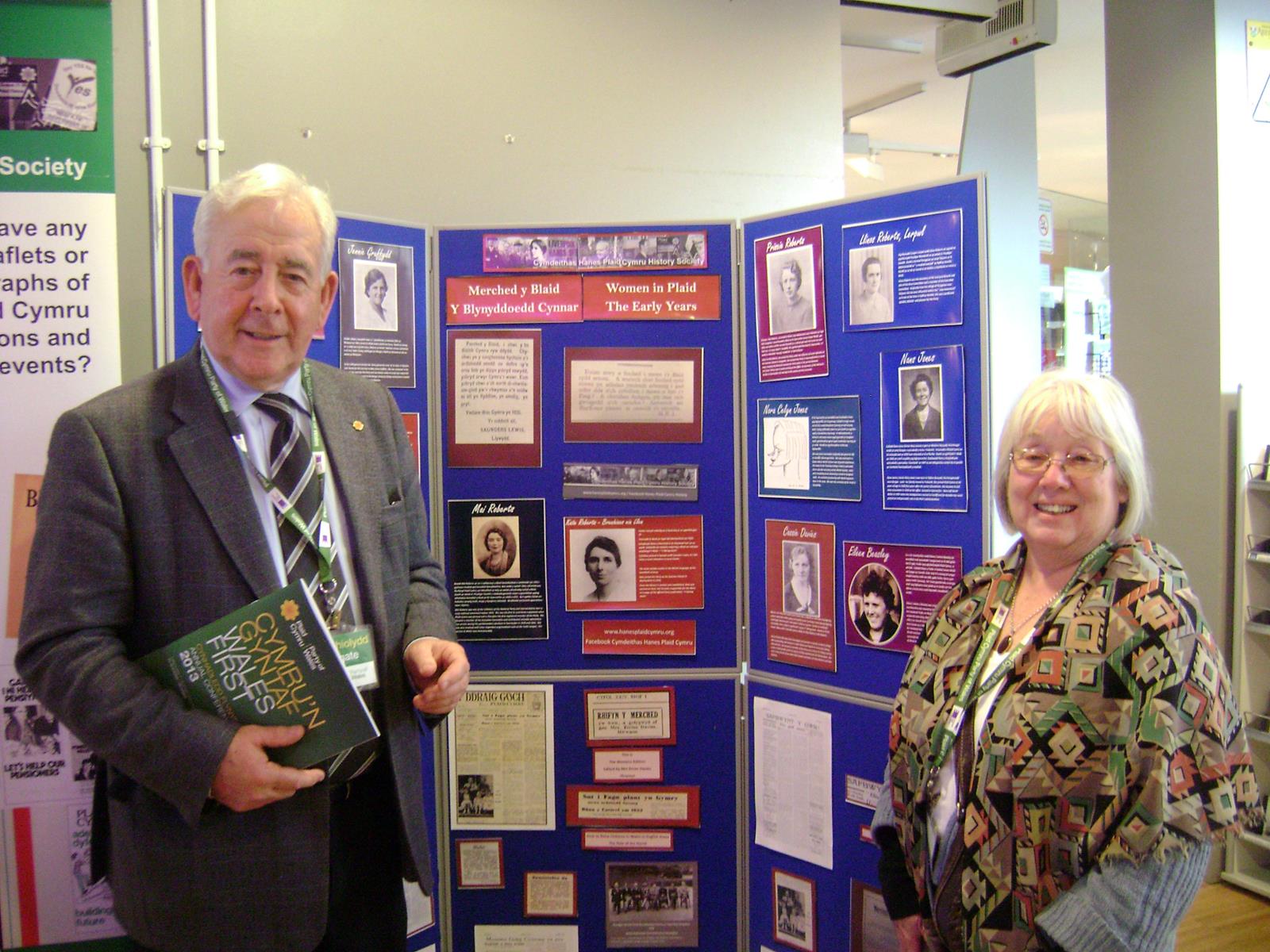
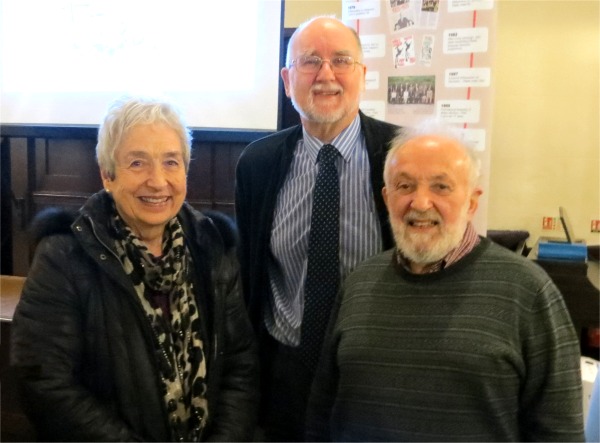
 Elenid Jones, Wyn James and Emrys Roberts
An evening event to commemorate the lives of two great pioneers of Welsh nationalism will take place in Gwaelod y Garth (at 7.30pm, Thursday 3 December 2015 in Bethlehem Chapel).
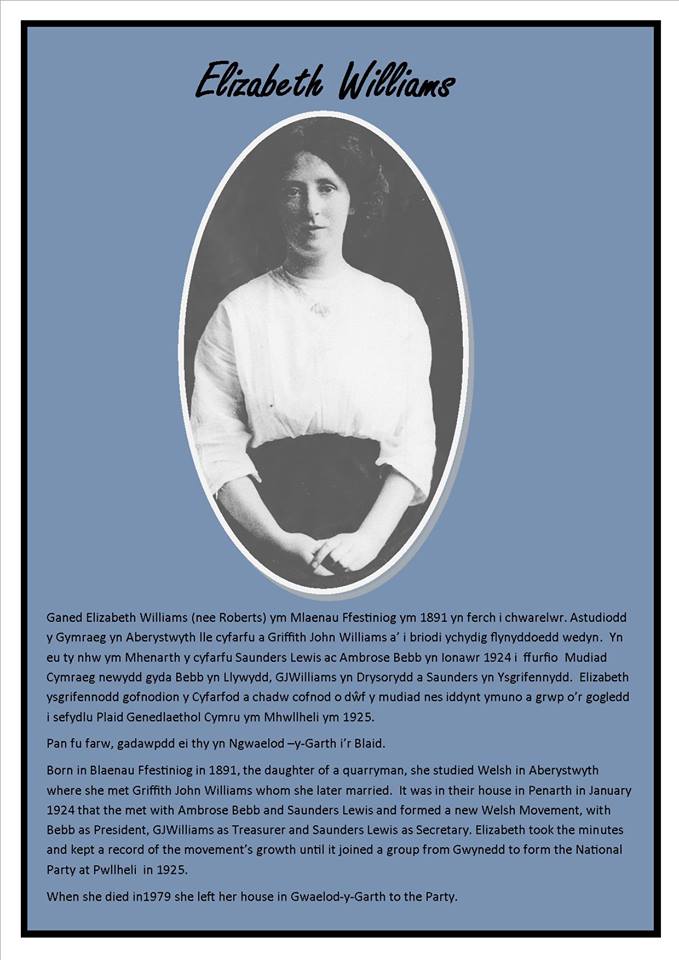
The focus of the evening, arranged by the Plaid Cymru History Society, is Professor Griffith John Williams and his wife Elisabeth, who played a leading role in the foundation of Plaid Cymru in the 1920s.
It was in their house in Bedwas Place, Penarth that a meeting was held in 1924, attended by Saunders Lewis and Ambrose Bebb, which led to the formation of Plaid Cymru the following year – with Elisabeth drafting the minutes of the meeting.
Griffith John Williams (1892-1963) was a University professor, poet and Welsh scholar who achieved widespread recognition for his ground-breaking study of the career of Iolo Morgannwg.
Among his works was a pamphlet published by Plaid Cymru entitled ‘The Welsh Tradition of Gwent’ which set out the old county of Monmouthshire’s claim to be Welsh decades before its status was secured.
His wife Elisabeth was also recognised for her staunch support for the Welsh language and way of life – insisting that the minutes of the local Pentyrch Parish Council were recorded in Welsh.
Locals tell stories of Mrs Williams walking into the school uninvited and taking over classes to teach the children Welsh, says her nephew, former Plaid leader of Merthyr council, Emrys Roberts.
During the evening’s events, Prof E. Wyn James will speak on “Seeing a great country emerging – the exciting dream of GJ Williams and Saunders Lewis”, while family members Elenid Jones and Emrys Roberts will share their memories of the couple.
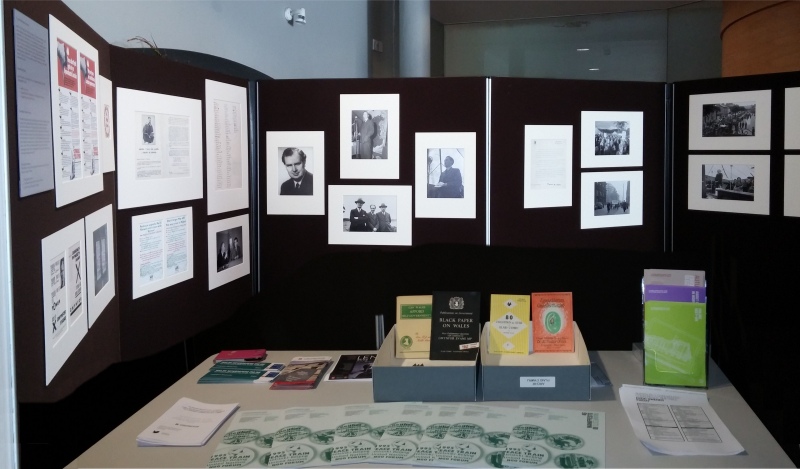
There will also be an exhibition of part of the materials they have bequeathed to the Museum of Welsh Life at St Fagans.
Details: ‘Remembering Griffith John Williams and Elisabeth’, 7.30pm Thursday 3 December 2015. Bethlehem Chapel Gwaelod y Garth. Organised by Plaid Cymru History Society . Lecture in Welsh with simultaneous translation.
———————————————————————
“Cymru am Byth”
Mrs G J Williams – a Committed Welshwoman
“Cymru am Byth” were the last words spoken by Mrs G J Williams before she passed away in St David’s Hospital, Cardiff in 1979. She had dreamed of a free and Welsh – speaking Wales since her childhood in Blaenau Ffestiniog – and that is what she fought for all her life.
She was a member of the initial discussions which led to the formation of Plaid Cymru, to the establishment of a Welsh school in Cardiff, the founding of St Fagan‘s Folk Museum and the formation of a separate Teachers Union for Wales. She harassed the Co-operative Movement and Welsh Local Authorities to make use of local suppliers and contractors, she set up a small co-operative to provide work for women and she organised the meeting which led to the establishment of the first Trading Estate in Wales during the depression.
The Early Years
Elisabeth Roberts (Mrs William’s maiden name) was born in1891 — the fourth of the six children of Richard and Elinor Roberts of Leeds Street, Blaenau Ffestiniog. Her father — originally from Llanddeusant in Anglesey – had been a soldier in South Africa and later worked in the Oakley Slate Quarry in Blaenau. Her mother was from Trawsfynydd. When her mother’s mother died, most of the family emigrated to Y Wladfa in Patagonia where her father built a hotel in Gaiman (where it is said Butch Cassidy and the Sundance Kid stayed while on the run from the US authorities). The building is now the Gaiman College of Music. Elinor, however, stayed behind in Wales to get married and had 6 children.
Richard and Elinor wanted their children to have a good education but could afford to send only two of them to university. The first was the eldest son Huw who became a Baptist minister and later for many years Welsh master at Llanelli Boys Grammar School – where he was nicknamed “Huw Bobs”.
Elisabeth also went to college, at Aberystwyth, where she studied Welsh. One of her fellow students was Griffith John Williams of Cellan near Tregaron and they both devoted their lives to studying and promoting the use of the Welsh language. Elisabeth taught Welsh in Cilfynydd, Pontypridd and later in Cendl (Beaufort) in Penycae (Ebbw Vale). After teaching Welsh for a while in the Rhondda, Griffith John became a lecturer in Welsh at University College, Cardiff. When they were married, Elisabeth – as was the rule in those days — had to give up her post.
Plaid Cymru
Elisabeth was a particularly strong character —she knew her own mind and would always express her opinion very forcibly. She was also a very active and industrious person who always sought ways of putting her ideas into action. She and her husband was very concerned at the declining position of Welsh after the first World War and invited friends to their home in Penarth to discuss what could be done. Lt was there in 1924 that four of them – Griffith John and Elisabeth themselves together
with Saunders Lewis and Ambrose Bebb — decided to form a Welsh Movement to campaign for a free and Welsh speaking Wales. Ambrose Bebb was chosen as President, Saunders Lewis as Secretary and Griffith John as Treasurer. lt was Elisabeth who made notes of the meeting and it was probably she who insisted that some positive action be taken rather than do nothing but talk.
ln her funeral in Bethlehem Chapel Gwaelod-y-Garth a few miles north of Cardiff the minister, the Rev Rhys Tudur, said that visiting Mrs Williams was always something of a challenge because on every visit she would give him a list of things he should be doing and would question him about progress with all the projects she had discussed on his previous visit — and this when she was well into her eighties and had been a widow for over 10 years.
In the months following that first meeting in Penarth other early stalwarts like D J Williams joined that first small group and then they leamt of a similar group being formed by H R Jones in the north. lt was these two groups of course which came together to form Plaid Genedlaethol Cymru (the Welsh National Party) during the National Eisteddfod at Pwllheli in 1925.
The Literary Traditions of Glamorgan and Gwent
Griffith John Williams was an enthusiastic and effective lecturer in Welsh Grammar and Philology but concentrated his research on the literary inheritance of Glamorgan and Gwent. He was the main authority on the work of the multi-talented lolo Morgannwg (whose descendant Taliesin Williams became a close friend) and he was appointed Professor of Welsh at Cardiff when the previous incumbent, W J Gruffudd, was elected as a Member of Parliament after the war. When T J Morgan (Rhodri Morgan’s father) moved from Cardiff to become Professor of Welsh in Swansea, Saunders Lewis was appointed to the vacancy left in Cardiff.
From very early days Griffith and Elisabeth would roam every corner of Glamorgan and Gwent with Elisabeth making notes about their discoveries. They also visited Italy a number of times on the track of Griffith Roberts, a Welsh catholic who had fled Britain under Queen Elizabeth l to escape religious persecution. He became a prominent figure there as secretary to Cardinal Borromeo in Milan. He also found time to write the first ever Welsh Dictionary — another of Griffith John Williams’s interests.
Elisabeth Williams’s role was not just to make notes for her husband, she also devised a record-keeping system so that the information could be retrieved when required. She designed a special cupboard containing scores of small drawers exactly the right size to keep the notes in their proper order. This cupboard — and a great deal of other furniture in Bryn Taf, the house in Gwaelod-y-Garth to which the couple moved in the early 1930s – was made in the Brynmawr factory established by the Quakers during the great depression – more of that later. Elisabeth also helped prepare material for publication — especially after Griffith John’s death in 1963.
Education
Although Elisabeth had to resign her teaching post when she got married, she retained a great interest in education. Friends were gathered together in Bryn Taf to discuss how to promote education through the medium of Welsh and the need for such a school in the Cardiff area. Eventually a Welsh stream was established in one of the city’s schools and then a Welsh school was established in Llandaf — and called Bryn Taf.
The entrance to Bryn Taf, Gwaelod-y-Garth is just across a lane from a side entrance to the local primary school. During break periods Mrs Williams would invite the children into her garden where she would play the harp and teach them Welsh folk dancing. (Her harp, incidentally, was the one on which Evan James of Pontypridd had composed Hen Wlad fy Nhadau.) Mrs Williams later gave it to Rhydfelen Welsh Comprehensive School for use by the pupils and had it renovated by John Thomas, a harp-maker who lived in Gwaelod-y-Garth at the time. When the school was moved some years later the harp was given to the Pontypridd Museum). If the weather was bad, the children would be taken into the house and shown how to make paper hats and boats – and everything through the medium of Welsh, though most of the children weren’t Welsh speaking. Mrs Williams was always reluctant to turn to English, believing that the children would soon pick up Welsh if one persisted in speaking it.
Locals also tell stories of Mrs Williams walking into the school uninvited and taking over classes to teach the children Welsh — with the teachers too afraid to intervene! Some of the children used to go round the village each year collecting donations for overseas missionary work. They knew they would get nothing at Bryn Taf unless they asked in Welsh. There are monoglot English speakers still living in the village who can reel off the Welsh greeting they would have to use if calling on Mrs Williams.
UCAC and St Fagan’s
The late Gwyn Daniel was Headmaster at Gwaelod-y-Garth school during part of this period and he would often visit Mr & Mrs Williams for a chat after school. One of the topics was the need for a distinctly Welsh teachers‘ union. This led to the formation of UCAC (the National Union of Teachers in Wales) of which Gwyn Daniel was the first secretary. In 1968, Mrs Williams gave a substantial sum to UCAC to establish a Bryn Taf Trust providing scholarships to Welsh-speaking disabled children.
Gwaelod-y-Garth was part of the Parish of Pentyrch and Mrs Williams would regularly attend Parish Council public meetings where she would speak in Welsh. At her insistence, the Council Minutes were kept in Welsh only well after the 2nd World War. Some of the only English words she ever used were when she imitated a snobbish Englishman who, when the meeting was asked if the minutes were correct, would reply “I suppose so” in a posh English accent even though he couldn’t understand a word of them!
Iorwerth Peate, who later became the first Curator of the Welsh Folk Museum, was also a regular visitor at Bryn Taf at this time and it was here they discussed the possibility of establishing this kind of museum in Wales. Who had the original idea l don’t know, but l’m pretty sure it was Mrs Williams who insisted that something should be done to make it come true.
Creating Work
Mrs Williams’s interests were far wider than the Welsh language alone. She understood that the language and traditions would not survive unless there was a sound economic base for local communities. She wrote incessantly to Welsh local authorities urging them to purchase locally produced goods where possible and use local companies for goods and services. She also corresponded with the Co-operative movement in Scotland and secured from them long lists of goods and services they sourced locally. She would then pass the information on to the Co-operative movement in Wales, urging them to follow suit wherever possible.
From Gwaelod-y-Garth to London
Again, she decided to act as well as write. Unemployment amongst the men of the village was getting worse during the 1930s and Mrs Williams realised that in many cases the wives were hit hardest, having to keep the home warm and put food on the table. She set to and formed a women’s group in the village to make some money and keep alive a traditional skill.
Bryn Taf is a fairly large house with rooms on the second floor not often used. Mrs Williams arranged for the women to be taught how to quilt. She herself copied traditional patterns to produce designs for quilted cushions, dressing gowns etc. And paid for someone to make the necessary frames. She persuaded some of the local school-children to collect bundles of sheep’s wool from local fences and hedges for the filling and set-up work rooms in Bryn Taf. Mrs Williams herself purchased the materials needed and was responsible for selling the finished product.
She contacted David Morgan’s – the top Department Store in Cardiff at the time — and persuaded them to put on an exhibition of traditional Welsh crafts, which became an annual feature until well after the 2“° World War. She realised, however, that because of the depression few people in the area could afford to buy their produce, so she packed her bag with samples and went to London where she sold the goods to some of the best London shops — Liberty’s for example would pay £25 (several hundred pounds in today’s money) for a Gwaelod-y-Garth dressing gown. They won prizes for their work — some fine examples can be seen today in St Fagan’s Museum. Mrs Williams was very supportive of the Quakers when they decided to establish a furniture factory in Brynmawr to provide employment for unemployed men. As mentioned earlier she designed the cupboard which they made to house her husband’s research notes. She bought a number of other items of furniture from them as well, especially for her bedroom. The Carreg Gwalch Press has published an interesting booklet about this Quaker venture in which they list many of the people who bought furniture from them. lt is interesting to note that most of them were friends of Mrs Williams and her husband. Although l’ve got no evidence to support my theory — l bet many of them agreed to buy the furniture to stop her nagging them!
Mrs Williams understood that though the quilting group she had established might provide some income for a small group of people in Gwaelod-y-Garth, something on a much bigger scale was needed to tackle the area’s problems as a whole. She wrote to every minister and every clergyman in the industrial south-east to urge them to attend a meeting she organised in Cardiff – it should be remembered that men of the cloth were still very influential people in the community in those days. Hundreds turned up and again Mrs Williams took the notes of the meeting — taking another lady friend with her as it would not have been considered appropriate for her to be the only woman present in such a meeting! This was the start of the campaign to try to find work for the unemployed men of the area which was responsible for the establishment of the first Trading Estate in Wales in Trefforest – virtually within a stone’s throw of Gwaelod-y-Garth on the other side of the Taff Valley.
Remembering Plaid
Throughout her life Mrs Williams remained faithful to the party she had helped create back in 1925 – for example at one stage she was in correspondence with Robert Maclntyre, President of the SNP, to seek his views as to whether or not it would be wise to campaign for the appointment of a Secretary of State for Wales as an interim measure.
In the 50s and 60s of the last century she would be seen frequently in the Plaid head office in 8 Queen St, Cardiff – often in the company of her brother Hendri (my father, William Henry Roberts) stuffing financial appeals into envelopes, maintaining membership and financial records etc. And when I became one of the leaders of the Plaid Cymru group that took control of Merthyr Tudful Borough Council in 1976 (the first public body to be officially controlled by Plaid) she was always full of suggestions as to what our priorities should be and grilled me on how we were getting on. (I fully understood Rev. Rhys Tudur’s comments at her funeral!)
When she died, all the books were let to the National Library (which kept a replica of Griffith John’s study for many years), the furniture and some of the quilting to St Fagan’s and Bryn Taf itself to Plaid Cymru. She and Griffith John never had any children of their own. Wales and the people of Wales were their children and they took great care of them. lf “Cymru am Byth” (Wales for ever) truly does become a reality they will have contributed immeasurably to enabling that to come about.
Emrys Roberts