Dafydd Huws 1936 – 2011

Dafydd Huws  1936 – 2011

Tribute by Dafydd Williams

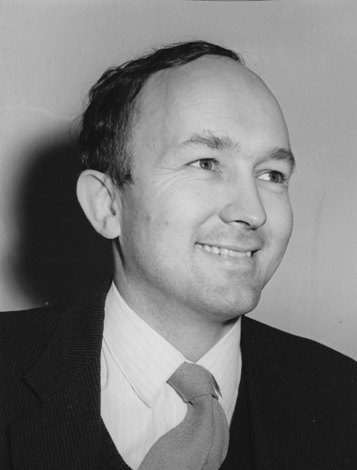
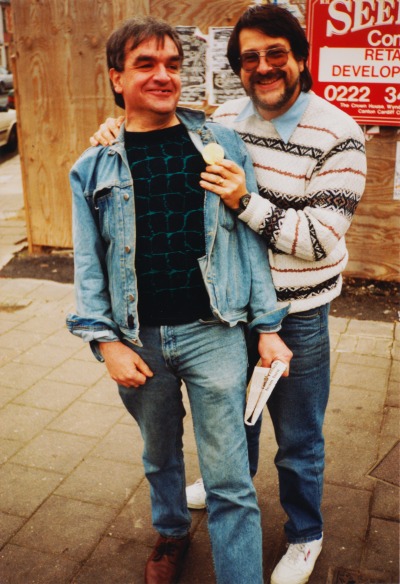
Dafydd HuwsDafydd Huws, who died aged 75 during 2011, was a leading member of Plaid Cymru who helped hold the party together at a crucial phase in its history.

He combined three careers – as a psychiatrist, farmer and politician – bringing to each of them a capacity for innovation and for speaking his mind.  Later in life he turned to the promotion of renewable energy as a way of bring new life to rural communities in West Wales.

I first met him in 1964, as a new member of CĂ´r Aelwyd Caerdydd, the Urdd  youth choir led by Alun Guy.  Dafydd was a star member of the tenor section, whose musical ability made him exempt from regular choir practice.  You couldn’t miss his mischievous sense of humour and his store of jokes. Dafydd was the first I heard to perform “I’m Kerdiff born and Kerdiff bred” – although he was actually born in Kenya.

He worked as a leading psychiatrist, who became Clinical Director of South Glamorgan psychiatry service.  This was a truly high pressure job, with responsibilities ranging from the treatment of the severely disturbed to preparation of evidence for court cases.  Later on, I would see him in his work environment at Tegfan in Cardiff’s Whitchurch Hospital, when I called during his lunchtime break to prepare for Plaid Cymru executive meetings.  There I saw for myself the way he engaged with  professionals and patients alike with never failing ease and humour.

Dafydd’s natural gift for communication meant he was soon in demand by the media, making frequent appearances on radio and television on medical issues and current affairs in both Welsh and English.  His love of Wales, its landscape, language and culture was boundless, and later in life he mastered the intricacies of Welsh metrical poetry, becoming an accomplished practitioner in the art of cynghanedd.

His second career, in agriculture, provided a welcome relief from the strains of medical life.  Soon after I got to know him, he took the major gamble of acquiring part ownership of Mynydd Gorddu, an upland farm in the Pontgoch area near Aberystwyth, close to his childhood home.  Dafydd’s commitment reflected his deep attachment to the life of rural Wales rather than a commercial investment, although he proved adept at running a business as well as being a caring employer.

But most people will remember him for his involvement with politics as a lifelong member of Plaid Cymru.  In the heady days that followed the 1966 Carmarthen byelection, Dafydd took on the task of contesting the Plasmawr ward, an area that included Fairwater and part of Ely in Cardiff West.  And in 1969 his charisma and enthusiasm carried the day, winning Plaid Cymru’s first ever seat on Cardiff City Council with a razzmatazz campaign that included motorcades and yellow dayglo posters galore.

He was to contest Cardiff West against George Thomas, later Viscount Tonypandy, fighting the 1970 and the two 1974 general elections.  By the late 1970s, his services as an inspirational candidate were required in the more winnable seat of Ceredigion, his home county.   Dafydd was far from keen.  Apart from the heavy demands of being a frontline candidate, there was always the dread possibility of winning!  Life as an MP in Westminster held no appeal for him, and he frequently told me how he admired the ‘two Dafydds’ (Wigley and Elis Thomas) who showed every sign of relishing their job in the House of Commons.  What swung the balance was a letter from Gwynfor Evans, concluding with the words, ‘Dafydd, derbyniwch hyn fel eich tynged’ –  accept this as your destiny, or fate!.

In the same way, he accepted the role of Chairman of Plaid Cymru in the wake of the failed 1979 referendum and the loss of Gwynfor Evans’ seat at Carmarthen.  This is never an easy job (and it was and is of course unpaid).  In the circumstances of the 1980s, at a time of considerable infighting over the direction of the party, it was a veritable bed of nails.  Dafydd saw it as his role to steady the ship; accepting that the frequent attacks he had to endure went with the territory.  Plaid Cymru owes him a huge debt of gratitude for holding the party together and preparing for successful 1997 referendum and later Assembly election advance.

Perhaps that experience was good training for the new role of pioneering renewable energy.  Dafydd was an innovator by instinct: and he saw that the imperative of developing wind energy could help provide rural communities with a much needed economic input – providing that control was in the hands of local people.  He succeeded in developing a wind farm at Mynydd Gorddu in the face of opposition, mainly from incomers to the area.  That involved a running battle over the red tape surrounding supply of power through the National Grid, which made local control well nigh impossible.

A more ambitious project near Tregaron, Camddwr, was held up by similar bureaucratic issues – this time the interpretation of how Ministry of Defence low flying restrictions impacted on wind farm development.  Dafydd was not prepared to accept the civil service view; so he travelled all the way to Aberdeen to attend an energy policy convention to lobby a senior MoD official who just happened to be a former student at Aberystwyth.  As suspected, the strict interpretation turned out to be misplaced; and the project may well proceed, although too late for Dafydd to witness its fruition.  And it was during this mission to Aberdeen that he noticed the first signs of the cancer that he fought so bravely for the next seven years.

Whatever the challenges that confronted him in his professional and political life, there is no doubting the enormous happiness he found in his family.  Meeting Rhian brought to an end his career as one of Wales’ most eligible bachelors but it opened up his life as a husband and father of three daughters and two sons, who were a source of great happiness and fulfilment.

To his family and friends, Dafydd will remain the source of many fond memories: to all of us, his life is an inspiration to make Wales the free, self-respecting nation that he sought for future generations.

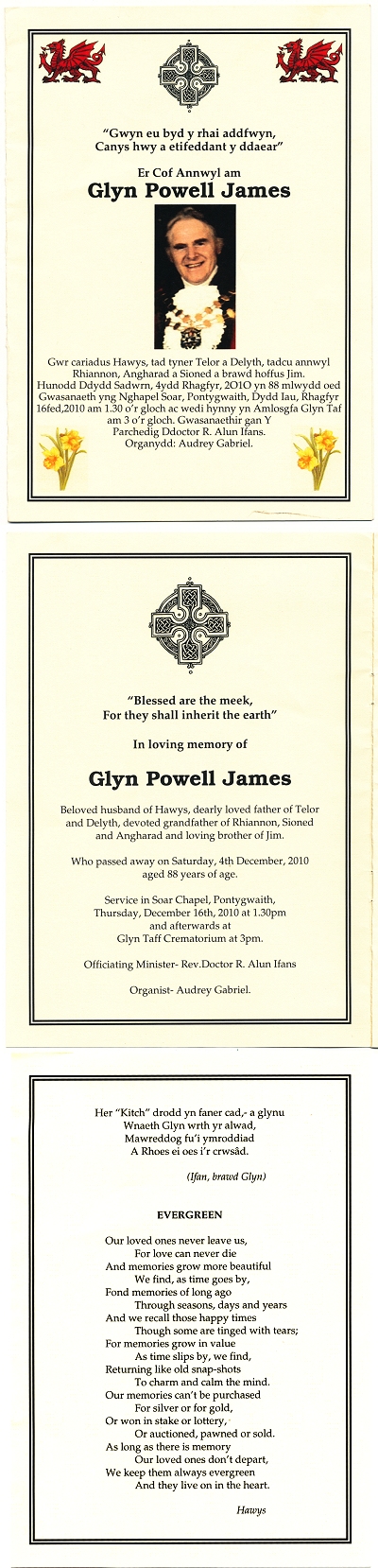
Glyn James 1922 – 2010

Glyn James: an inspiration to so many

Plaid Cymru President Jill Evans MEP has expressed her great sadness at the death of Rhondda’s Glyn James.
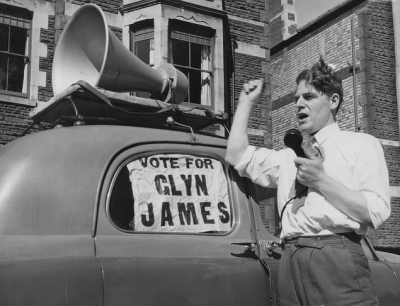
Glyn JamesBorn in Llangranog, Glyn came to the Rhondda to work in Tylorstown and then Lady Windsor collieries.
He first stood in Ystrad Rhondda in a by-election in 1959, losing by only 4 votes. He overcame the disappointment by winning the first ever seat for Plaid Cymru in the Rhondda the following year. He was re-elected many times and served as Mayor of the Rhondda.
Glyn was a campaigning councillor. He chained himself to Llwynypia hospital in a protest to keep services; he climbed onto the roof of the council offices to call for more services for the Rhondda Fach; and he broadcast on his pirate radio station, ‘Radio Free Wales’ from Penrhys Isaf farm. He stood for the Rhondda several times in general elections and will be remembered, too, for the smoke-breathing dragon on the back of a lorry that was typical of the way he got his message across.
Jill Evans said,
“Glyn was a close friend and colleague. He was a major figure in the Rhondda and in Plaid Cymru and a real inspiration to me. He loved the Rhondda and Wales with a passion and his enthusiasm was reflected in his colourful and exciting campaigns. He never stopped campaigning. He was the eternal optimist who never doubted that Wales would win its freedom. It is this, most of all, that I will remember about Glyn and that will continue to inspire so many of us in Plaid Cymru for many years to come. He was a great man and I will miss him very much. On behalf of Plaid Cymru I offer our deep sympathy to Hawys and the family.”


2010 Glyn James

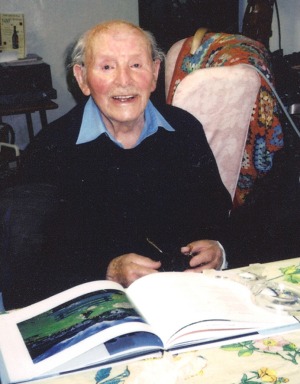
Stephen Griffith 1908 – 2010

Obituary

Stephen Griffith – Physics Master 1949-1969

Stephen Griffith was born in BIaenau Ffestiniog, a slate-producing area of North Wales in 1908, and died at home, cared for by his family, on 12th December, 2010 in Neyland at the age of 102.

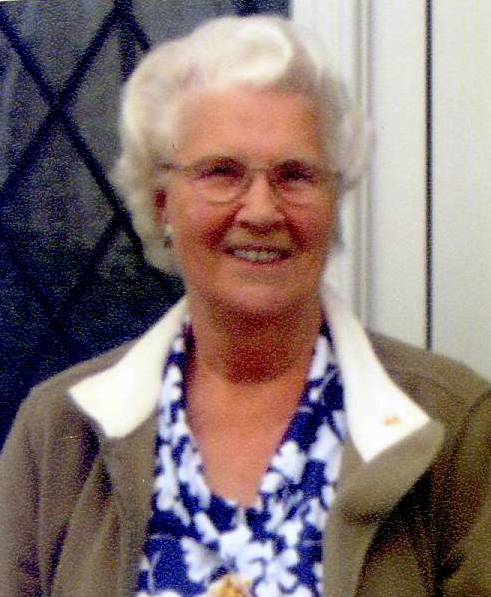
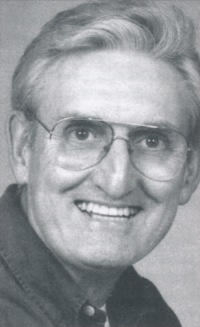
Stephen GriffithHe went to Bangor University, where he read Physics, and was awarded an MSc. in 1958 for his statistical work and analysis of reasons for failure in Grammar School. He spent his career as a Physics teacher in Hereford. Buckinghamshire and, from 1949, in Pembrokeshire. In 1942 he married Clemency, and 3 daughters were born to them, Dilys, Margaret and Enid. As a conscientious objector and enthusiastic pacifist, he drove an ambulance during the Second World War, and after the war he and Clemency became Quakers. He then became a member of Plaid Cymru, and as a close friend of his fellow Quaker, Waldo Williams, he backed Waldo’s campaign in the 1950’s as Pembrokeshire’s first Plaid Cymru candidate.

During his days at Pembroke Grammar School, he, and Islwyn Griffiths, a great friend and colleague, with the help of others, ran an International Camp for overseas students and others who were studying in Britain, for a fortnight every summer for 15 years in succession. They were eager to foster understanding and good relations between the countries represented. After his school days in Pembroke, he went as a volunteer to teach physics in a school in Ghana to make his contribution to the third world. After that he taught Science, Maths and Welsh locally.

The decade that followed was his most fruitful as regards literary output. He was the author of 7 books, 5 of them in Welsh. He was an enthusiastic Eisteddfod goer, and in recognition of his contribution to the literary life of Wales, he was privileged to be admitted in white robes to the Gorsedd Circle in Rhyl in 1985.


Among his many interests were bee keeping, enjoying the Cleddau Waterway in his little boat, watching travel programmes on television, taking interest in his tiny pond with its frogs, water lilies, and solar fountain, reading Welsh books and battling the gremlins in his computer! He was very keen on the environment and had solar panels installed on the roof of his bungalow in Neyland. In his latter years he used to be seen from time to time on his scooter for the disabled. As long as he was able to, he took a great interest in life and issues of the day.


His funeral took place at Parc Gwyn on 17th December 2010 and a Memorial Meeting to give thanks for the grace of God in the life of Stephen Griffith was held in the Quaker Meeting House, Priory Road, Milford Haven on Saturday, 29th Jan., 2011 at 2pm.

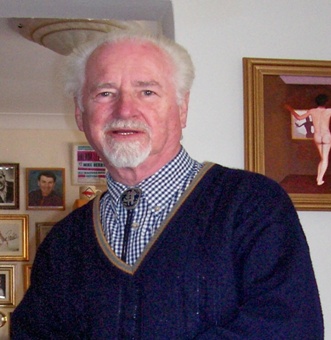
Terry O’Neill

TERRY O’NEILL

Terry O’Neill, a Plaid stalwart for over forty years, died on 14th May 2010.

Owen John Thomas writes:

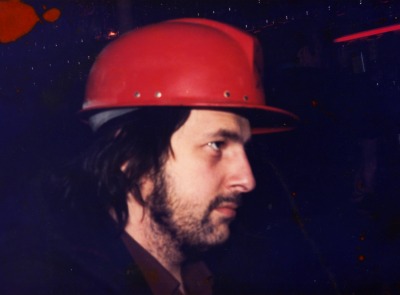
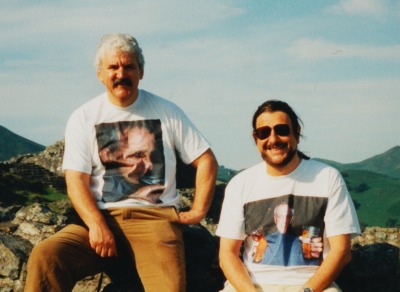
Terry O'NeillTerry was one of Plaid’s heroes – an activist since 1969, when he and his brother Dennis joined without each other’s knowledge during the same week. A committed letter writer, he often commented perceptively on current topics in the columns of the Echo and the Western Mail.

One of his passions was music, particularly rhythm and blues, an interest shared with a young lady called Patricia James, and their rock ‘n roll partnership lasted almost 50 years.

He and I avidly studied election results, looking for a glimmer of hope on many a dark day. He worked with me in the National Assembly and will be remembered as the only one wearing a bootlace tie in the Assembly!

We treasure his memory – a pillar of Plaid for over 40 years.

Dr Ceinwen H. Thomas 1911 – 2008

A Remarkable Pioneer: Dr Ceinwen H. Thomas (1911–2008)

An article based on a tribute delivered by Dr E. Wyn James at the funeral of Dr Ceinwen H. Thomas at Thornhill Crematorium, Cardiff, 7 February 2008. It was translated into English by Rhodri Jones. An earlier version was published inDawns, the journal of the Welsh National Folk Dance Society, in 2008.

Dr Ceinwen ThomasIt would be difficult to begin any tribute to Dr Ceinwen Hannah Thomas without mentioning the word ‘Nantgarw’. Although she lived in Whitchurch, Cardiff, among other places, for much of her life, you would not be long in her company before being told that she came originally from Nantgarw and that, although that village is situated only seven miles to the north of central Cardiff, she was only the second generation of her family to be able to speak English.

Dr Ceinwen came from a family which had its roots deep in the lower reaches of the Taff Valley, and she lived in Nantgarw until she had completed her studies at University College, Cardiff in 1937. She attended the infant school at Nantgarw, and then the junior and secondary schools at Caerffili. She always complained bitterly of the anglicised nature of her education prior to reaching the secondary school. For example, although her junior school in Caerffili was near Tonyfelin Welsh Baptist Chapel, none of the teachers ever referred to the fact that the famous preacher, Christmas Evans, had been a minister there and had his home near the school. Even the massive Caerffili Castle was never mentioned in history lessons at the junior school; the focus of such lessons was, rather, on the likes of Walter Raleigh and Francis Drake. The secondary school was more enlightened: a fair amount of Welsh history was taught as part of the curriculum, there was a branch of Urdd Gobaith Cymru (the Welsh League of Youth) in the school, and a number of the teachers spoke Welsh naturally both to each other and to the Welsh-speakers among the pupils. Whilst a student at Cardiff, Ceinwen Thomas gained a first-class honours degree in Welsh and then went on to gain an MA in 1936 (and then a Doctorate from the University of Ireland in 1940) – a rare educational achievement for a man, let alone a woman, in those days.

Although Ceinwen Thomas left Nantgarw in 1937, it can be said that the whole of her very full and long life revolved around that village and the Welsh language. With her mother, Mrs Margretta Thomas – another remarkable woman – Dr Ceinwen made an extremely important contribution in recording the Welsh-language folk culture of Nantgarw and its environs. One example of their work was the transcribing of the Nantgarw Dances, dances that are by now such an important part of the folk dance scene in Wales. Indeed, it would not be too much to assert that Dr Ceinwen Thomas and her mother have set Nantgarw – alongside D. J. Williams’s Rhydcymerau, say, or O. M. Edwards’s Llanuwchllyn – in that pantheon of villages which have come to be regarded as the embodiment of Welsh folk culture at its best.

In 1993 the University of Wales Press published her detailed description of the Welsh dialect of Nantgarw in two voluminous tomes. This was her magnum opus, the culmination of many years’ study of the phonetics and grammar of Welsh (and especially the language of south-east Wales). In the 1960s and the 1970s she directed the newly-established Language Research Unit in the Welsh Department at University College, Cardiff. Due to the fact that the number of speakers of the ‘Wenhwyseg’ – the Welsh spoken in south-east Wales – was diminishing significantly by that time, the Unit gave its study special attention, and Dr Ceinwen Thomas’s period there witnessed a flood of theses by the Unit’s research students describing the Welsh dialects of various parts of south-east Wales, a corpus which forms a notable contribution to the study of the Welsh language.

However, this academic work in Welsh linguistics was a second career for Dr Ceinwen Thomas. During the twenty years between leaving University College, Cardiff in 1937 and her return in 1958, she was a Welsh teacher in Pen-y-cae (Ebbw Vale) and then in Bryn-mawr. She joined the newly-established Plaid Cymru as a student in Cardiff and remained an unflinching nationalist throughout her life. The 1940s and the 1950s proved to be battlefield years in her history: battling to promote the principles of Plaid Cymru; over interpreting the history of Wales from a Welsh standpoint rather than from that of English imperialism; over the place of Welsh in the world of education; and for the recognition of Monmouthshire as an intrinsic part of Wales. These were years of being at the front line in a time and at a place where things were very hard for the language and the national movement – but she lived long enough to see Plaid Cymru become a part of the government in the Senedd; the emergence of a generation of younger historians who interpret the history of Wales with a far greater Welsh flavour; a tremendous growth in Welsh-medium education; and the death of that hardy chestnut, ‘Wales and Monmouthshire’.

Ceinwen Thomas was a well-read and intelligent woman. She was a woman of strong convictions, and was ready to stand resolutely for those convictions, and fearlessly argue their cause. A small example of this was her persistent campaigning for the use of the old indigenous Welsh names for places in the Taff Valley, rather than the English versions or those coined in Welsh by ‘dynion dŵad’ (newcomers): ‘Y Mynydd Bychan’ (not ‘The Heath’ or ‘Y Waun’), ‘Draenen Pen-y-graig’ (not ‘Thornhill’ or ‘Bryn-drain’), ‘Rhiwbina’ (not‘Rhiwbeina’), ‘Rhydfelen’ (not ‘Rhydyfelin’). She gave generously and consistently to those causes close to her heart: causes that were philanthropic, ecological and national in nature. It is also worth emphasising that she came to prominence in public and academic life from the 1940s onward, when those circles were to a great extent male dominated

One aspect of the Nantgarw life of her childhood against which Dr Ceinwen Thomas turned her back for many years was the world of the ‘tŷ cwrdd’ (the meeting house/chapel). According to her own attestation she was quite agnostic in her response to Christianity for a long time. Then, fairly soon after her retirement, she ventured one Sunday morning to one of the services of the newly-formed Welsh Evangelical Church in Cardiff. She was reminded at the meetings of that church of the warm atmosphere and the similar theological emphasis of the ‘tŷ cwrdd’ where she was raised in Nantgarw. After a period of time she came to profess anew the Christian faith. She did not do so in an unthinking or sentimental way. Dr Ceinwen was not like that! Rather, she weighed up with great seriousness the words coming from the pulpit and re-assessed her situation and creed in the light of what she had heard. The result was that, towards the end of her life, she returned to the faith of her mother and of her forbears in Nantgarw.

During this period she would delight in reciting some of the folk hymns from the time of the revivals that her great-grandmother loved to sing. That great-grandmother, Ann Meredydd – who lived in a cottage on Caerffili Mountain near the Clwyd y Gurnos tavern (now the Black Cock Inn) – was also quite a character and one who refused to bow or curtsey to the gentry of the area, as was the custom in that period. It is appropriate to end this tribute to Dr Ceinwen Thomas in the sound of one of those verses, a verse that likens salvation in the Christ of Calvary to that of a ship carrying her treasures to us. Here is the verse; the orthography reflects Dr Ceinwen’s own dialectal pronunciation (and that of her great-grandmother before her):


’en lestar iachawdwria’th                    Dear vessel of salvation

A ddæth o’r nef i ni;                        That came from heaven for we;

Tramwyws fôr o gariad                       Travelled o’er a sea of love

’yd bartha’ Calfari;                           To the shores of Calvary;

Dadlwythws ei thrysora’                    Unloaded all her treasures

Mewn tair awr ar y gro’s;                  In three hours on the cross;

Rhows fodd i rif nas rhifir                  And gave unnumber’d numbers

I fyw tragwyddol o’s.                       Eternal life not loss.

tr. Rhodri Jones

Hanes Plaid Cymru