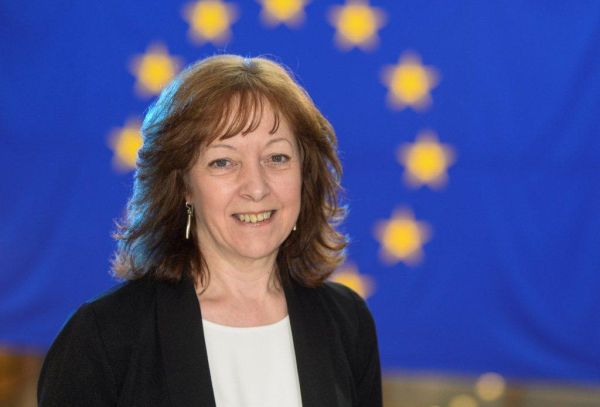
Jill EVANS official portrait – 9th Parliamentary term
Looking back over my career in the European Parliament, it’s hard to believe that it spanned over twenty years. In an article like this it is only possible to give readers a taste of the work of an MEP and try to demonstrate how valuable the European Union was to Wales.
When I first stood for Plaid in the European election in 1989, there was no hope of winning. By 1999 the electoral system had changed. Five MEPs were to be elected representing the whole of Wales on the basis of the percentage vote for each party nationally. With the highest ever vote for Plaid Cymru and with great excitement, Eurig Wyn and myself were elected as the party’s first MEPs. It was a milestone in Plaid’s history.
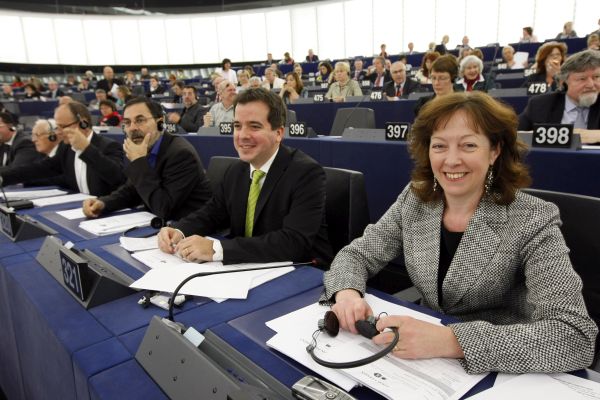
It was also a personal milestone for me. I had first visited the European Parliament in the 1980s while representing Plaid in a meeting of the European Free Alliance (EFA). I went into the parliament chamber to listen to a debate on regional policy. The chamber was not as bright and striking as today’s hemicycle and I realised how difficult it was to make out which MEP was speaking. They were small, almost insignificant figures. Yet each one put all their energy into presenting a strong argument in their minute or two of speaking time.
I was surprised and inspired. I was familiar with the kind of politics where personality was dominant. It was possible to win a debate by ensuring that a well known politician (a man, almost without exception) would support one side over the other and that others would follow. The individuals were as important as the issue. It was not like that in the European Parliament. Every member was respected.
It is the greatest irony that the campaign to leave the European Union was won because Boris Johnson decided to support it. Such a fateful decision had hung on the choice of one man. It reflects the malaise in UK politics.
It is interesting, too, to note that UKIP tried to introduce the worst aspects of Westminster culture in the European Parliament. Shouting, heckling and insults were typical of their behaviour in the chamber. Toxic politics.
I was criticised in the media several times for failing to live up to the false requirements of a successful politician by UK measures. I wasn’t going to be detracted from my main aim. Wales in Europe was more than a slogan. It encapsulated a vision of an independent Wales working in peace and partnership with other nations across the European Union to build a more democratic and equal Europe: the Europe of the Peoples.
I was comfortable with the way the European Parliament worked. I was most effective in a context where consensus was valued. I am very proud of my successes in improving legislation and raising the status of Wales and the Welsh language.
I had an amazing and unique experience as a Plaid Cymru MEP. I had the honour of leading the EFA group in the parliament for five years as EFA President and Vice-President of the Greens/EFA Group. This year I received the EFA Coppieters Award for my work promoting EFA values.
I campaigned on climate change, fair trade policies, against GMOs, for agriculture and rural Wales, for peace and justice and for the rights of minorities. In 2008 we won co-official status for the Welsh language in Europe: it wasn’t full official status but at least our language had recognition. In 2019 I was awarded the METANET European prize for my work on digital equality for all languages. My report is regarded as the gold standard for minority languages.
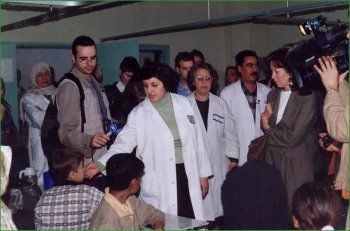
I had unique opportunities to attend the World Social Forum in Porto Allegre, Brazil, to the United Nations summits in Johannesburg, Copenhagen and Paris and to the WTO meeting in Hong Kong. I visited Iraq before the war and went to Catalonia many times at the request of their government to act as an official observer for the independence referenda. I also became very familiar with Palestine and Israel through many visits with the parliament delegation.
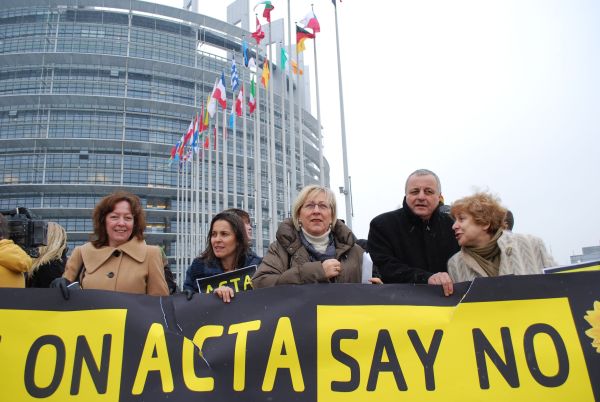
Travelling is part and parcel of the weekly life of an MEP. I would leave home in Llwynypia every Monday morning to get the train to Brussels. Thursday evening, I would set off for home. Once a month the parliament met in Strasbourg which meant moving everything to that city for a week.
The weekends were my travelling time around Wales.
Being a voice for Wales was a huge responsibility. At the same time it was the greatest honour. It took a lot of planning and to prepare a strategy to raise the profile and open every possible door for Wales. That involved mentioning Wales in every speech in the chamber, organising social events, exhibitions and conferences, publishing reports and inviting speakers and groups from Wales at every possible opportunity.
I had incredible support in this work from Welsh food and drink producers, choirs, universities, voluntary and community organisations and many, many more. You can’t beat lobbyists from Wales!
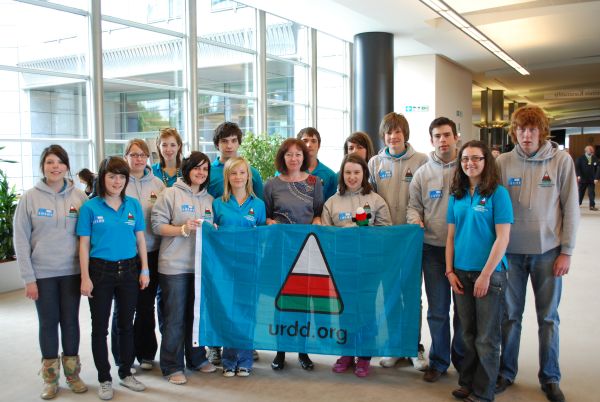
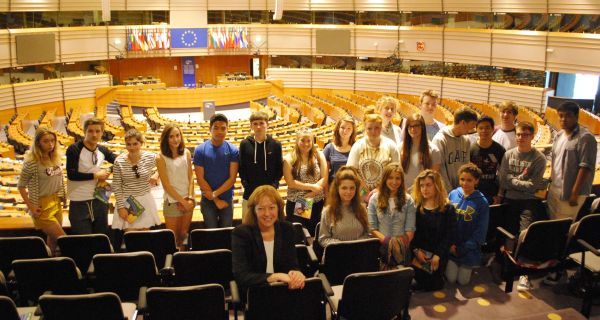
It was a particular pleasure to offer work experience to so many young people from Wales in my Brussels office. It was a privilege to offer them such an opportunity and at the same time to show off the talent and the huge potential which augers well for the future of our nation.
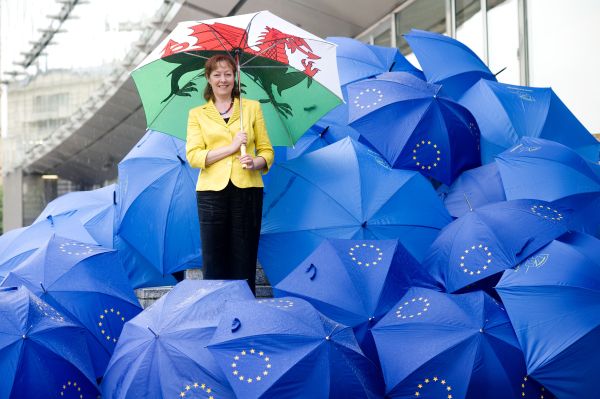
Wales is a European nation. I campaigned until the very last minute to keep Wales in the European Union and I am heartbroken that we have left. When I left Brussels for the final time, I gave a Draig Goch to our group in the parliament. They are looking after it until Wales takes its rightful place alongside the other nations of Europe and our flag will be raised again.
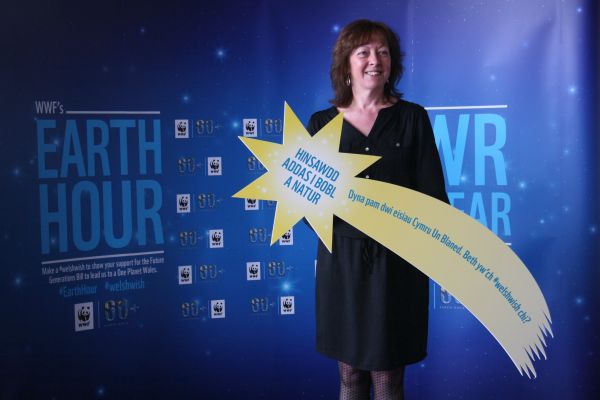
2009
2009
2010 Fferm Gwern
2010 Gaza
2010
2010 Yr Urdd
2012
2014
2015
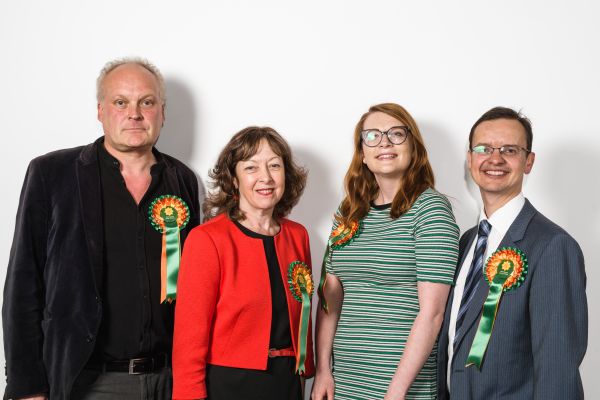
2019 Plaid Cymru EU election candidates Patrick McGuinness, Jill Evans MEP, Carmen Smith, and Ioan Bellin
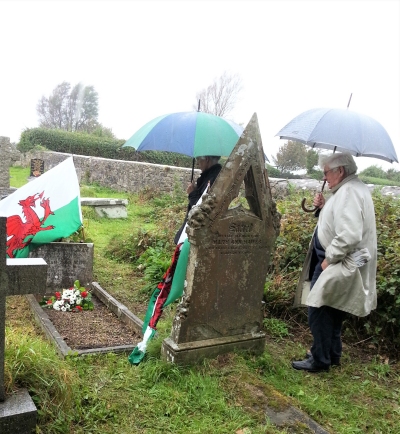
The 100th anniversary of the birth of the celebrated nationalist poet Harri Webb has been marked with the laying of flowers at his grave at St Mary’s Church, Pennard, Gower (12 noon Monday 7 September 2020).
Harri Webb was born in Swansea at 45 Tycoch Road and grew up in Catherine Street near the centre of the city. His family had strong links with the Gower peninsula.
He became a leading figure in Plaid Cymru, editing the party’s newspaper Welsh Nation and standing as its candidate at Pontypool in the general election of 1970.
Harri Webb came to prominence as a poet during the 1960s, when political nationalism was beginning to make headway in the industrial valleys of South Wales, and became a regular contributor to the magazine Poetry Wales.
The gathering at Pennard was told by Emeritus Professor Prys Morgan that Harri Webb had succeeded in achieving great popularity as a poet.
“His work was mainly through the medium of the English language, but no-one was a more warm-hearted Welshman than Harri Webb”.
Flowers were laid at the grave by Guto Ap Gwent, Kittle.
Guto Ap Gwent and Professor Prys Morgan at the grave of Harri Webb
after the ceremony in St Mary’s Church, Pennard
The ceremony was promoted by the Plaid Cymru History Society and Swansea and Gower Plaid Cymru with the kind cooperation of the Rev Peter Brooks, Vicar of the Parish of Three Cliffs, and conducted in adherence with current social distancing regulations.
Full details of the life of Harri Webb may be found at:
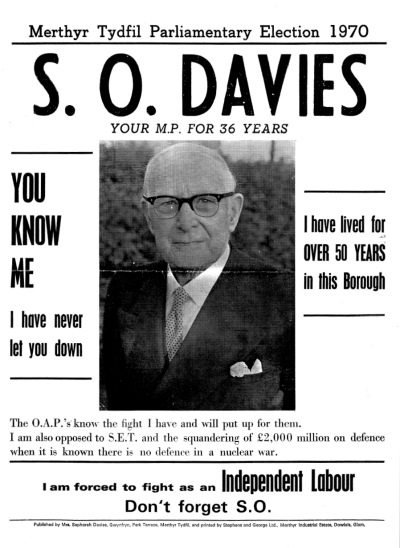
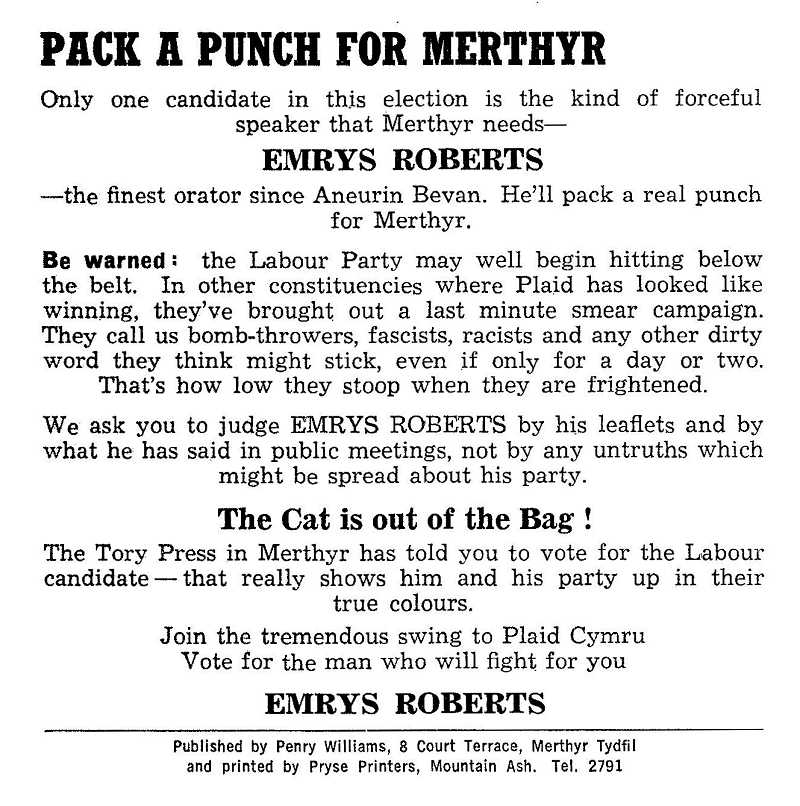
S.O. Davies was Labour MP for Merthyr Tydfil from 1934 to 1970. He was first elected in a by-election following the death of the local ILP MP with 51% of the vote (against the Liberal, ILP candidate and Communist) and 68% in the 1935 general election against the ILP only. But for the rest of his career, he received support from percentages ranging between 74% and 81%. The Plaid candidates who opposed him in the 50s and 60s were Trevor Morgan (as an independent nationalist), Ioan Bowen Rees and Meic Stephens.
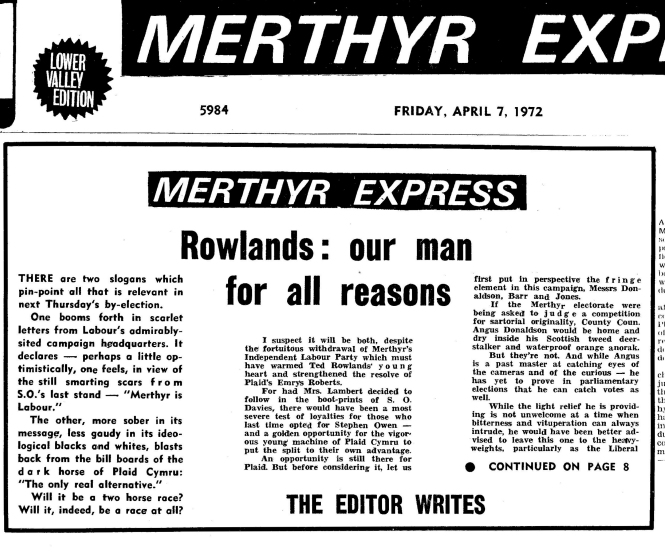
But before the 1970 election a reporter with the Merthyr Express had a look at a list of potential Labour candidates throughout England, Wales and Scotland. The name of S.O. Davies was there, with the * symbol next to him. The correspondent asked the printers what its significance was and got the answer that it meant ‘not re-adopted’ as the local party was in the process of selecting SO’s successor, although there was no discussion between them and him about the decision. The Merthyr Express announced this shocking news of the release of one who had served his people as a local councilor, mayor and Member of Parliament for tens of years.
The rest is a myth. S.O. as an ‘Independent Labour’ candidate (which would not be legally possible today), winning 51% of the vote against the official Labour Tal Lloyd (another former mayor). By a strange coincidence, these are the exact percentages (rounded) that S.O. and his liberal opponent received in the 1935 by-election. Plaid Cymru’s annual conference was held at Cyfarthfa Castle in 1958 and Tal Lloyd, in his capacity as the mayor, officially welcomed the members to the borough.
Chris Rees was Plaid Cymru’s candidate in 1970. He once told me that he did not only congratulate S.O. but added that it was the first time he could say how proud he was that he hadn’t won himself! And I know of at least one member of the Party who helped S.O. in his campaign.
S.O. Davies was a patriot. In the Wikipedia entry about him it is said: Largely indifferent to party discipline, he defied official Labour policy by championing such causes as disarmament and Welsh nationalism. He supported the Parliamentary petition for Wales movement in the 1950s, joining the speakers on stage at a rally organized by Plaid Cymru in Cardiff in September 1953 (see photo on page 297 of Tros Cymru, JE and Plaid by JE Jones, 1970). And in 1955 he introduced his ‘Government of Wales’ measure in the House of Commons, which was prepared with the help of party experts. But as expected, his attempt was unsuccessful.
Here is one interesting part of the debate on the floor of the House. S.O. said that support for the measure comes from ‘Monmouthshire, Cardiff, West —‘. George Thomas (MP for Cardiff West) interrupted him saying: ‘The hon. Gentleman won’t get much support there ‘. S.O. finished his sentence masterfully: ‘— Rhondda, and other places’.
S.O. Davies died in 1972, and the by-election was won for Labour by Ted Rowlands with 48.5% of the vote, the Plaid Cymru candidate Emrys Roberts gained 37%.
The Reverend Fred Jones (1877-1948) was one of the six founding fathers of Plaid Cymru who launched the party at a historic meeting at Pwllheli in 1925 and one of the famous Cilie family of poets from Ceredigion. He worked as a minister in Rhymni, Treorci and Tal-y-bont Ceredigion and was a lifelong nationalist.
Dafydd Iwan delivering a lecture on the career of his grandfather, Fred Jones, one of the founding members of Plaid Cymru. Also in the picture is Ben Lake MP, who took the chair at the Plaid History session on 4 October during the party’s 2019 annual conference in Swansea.
A Blue Plaque in memory of leading nationalist Glyn James will be unveiled at 2:00pm Saturday 19th October at 9 Darran Terrace, Glyn Rhedynog / Ferndale, Rhondda CF43 4LG. The plaque will be unveiled by Councillor Geraint Davies and the event has been organised by the Maerdy Archive. Refreshments will be served at Ferndale Business and Professional Men’s Club at 65-66 Dyffryn Street, Ferndale CF43 4EW, thanks to the Maerdy Archive.
‘A man of immense talent who worked heart and soul for Wales’ – that is the thumbnail sketch of Wynne Samuel, one of Plaid’s early champions. It comes from the opening lines of this portrait of a pioneer nationalist – at one time considered a potential leader of Wales’ national movement.
This tribute by Plaid History chairman Dafydd Williams traces the course of Wynne’s extraordinary career, and for the first time publishes a number of new photographs and documents. It is based on an illustrated lecture delivered at Plaid Cymru’s conference in Cardigan on Friday 5 October 2018, but has been substantially amended and expanded. You can read it here.
Many thanks to the family of the late Vic Davies, Rhondda, for donating to Plaid History a truly inspirational collection of material concerning the Rhondda West by-election that took place over half a century ago.
The collection includes a scrapbook of press cuttings that recall the dramatic contest in 1967 when Vic Davies succeeded in slashing Labour’s towering majority from seventeen thousand to just 2,306 votes, a swing of 29 per cent to Plaid Cymru.
There are a number of valuable telegrams and letters, including congratulations from Plaid Cymru president Gwynfor Evans, who had been returned as MP for Carmarthen the previous year.
The collection also includes a letter from the SNP’s Dr Andrew Lees of Bearsden near Glasgow inviting Vic Davies to travel to Scotland to support Winifred Ewing’s campaign in the Hamilton by-election – in particular by accompanying her down a local coal mine. Winnie Ewing had met Vic a few weeks previously in the Plaid Conference in Dolgellau.
It is clear from the contents of the collection that Vic accepted the invitation, went down the coal mine and also addressed a by-election rally. A handwritten letter from Winnie Ewing dated 2 October 1967 expresses her gratitude for his support and for helping make the events successful. Four weeks later, Winnie Ewing went on to win Hamilton and join Gwynfor in Westminster.
After copying items for Plaid History purposes, the collection will be sent to the National Library in Aberystwyth to form an important part of the Plaid Cymru archive.






 ‘A man of immense talent who worked heart and soul for Wales’ – that is the thumbnail sketch of Wynne Samuel, one of Plaid’s early champions. It comes from the opening lines of this portrait of a pioneer nationalist – at one time considered a potential leader of Wales’ national movement.