
“Kitchener Davies – from Tregaron to Trealaw “
Lecture by Athro M Wynn Thomas Thursday 4 August 2022 12.30pm Pabell y Cymdeithasau 2 in the Eisteddfod Genedlaethol. Chairman Dafydd Williams
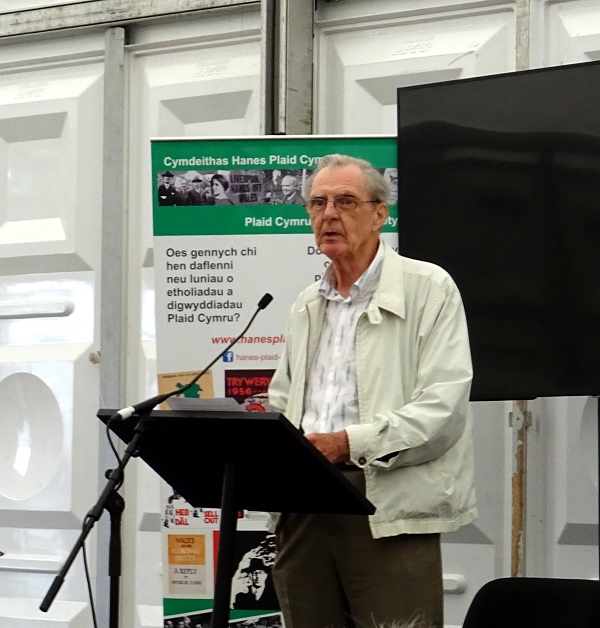
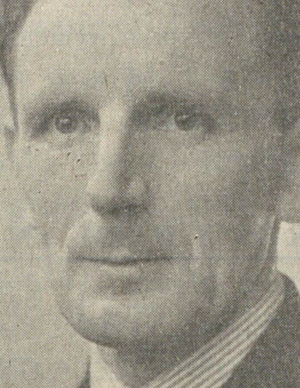
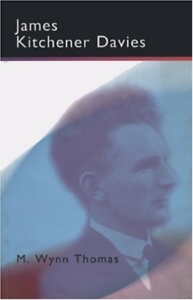
James Kitchener Davies, brought up in the Tregaron area of Ceredigion, won renown as a poet and dramatist. He was also a leading figure in Plaid Cymru at a time when it was a small movement seeking a foothold in the valleys of the South. In this lecture, the author and academic Wynn Thomas presents a penetrating analysis of an important character in the story of Wales’ national movement.
‘Kitch’: political hero and lost soul
Wynn Thomas
Next time you visit Cardiff, venture a few miles north along the A470, past Castell Coch and carry on until you reach the turn-off for Pontypridd. Go through the town and head for Porth. There, take the road that goes in the direction of the Rhondda Fawr. Before long, you will see a cemetery on the right, mynwent Y Llethr Ddu. Go in, and among the innumerable graves you will find the grave of the famous Tommy Farr. Everyone of course still remembers his heroic contest in New York against Joe Louis. And then within a stone’s throw you will come across the grave of James Kitchener Davies, someone who in his own way was a fighter just as brave, just as fearless, just as tough – and perhaps in the end just as unsuccessful – as Tommy Farr himself. Kitch was a real ‘scrapper’, to use the language of the valleys. As he confessed when recalling the past,
‘We are the George family, quite rough people, some of us. There was once a bitter quarrel between us and another respectable family, one of whom was the gravedigger in Bwlchgwynt. One day, a stranger came past and looked at the gravestones. “Well,” said the stranger, ‘there are a lot of these Georges buried here”. “Yes,” was the blunt reply, “but not half enough of the devils.” ‘
Kitch was a champion in the world of words, y ceiliog bach dandi a arfere glochdar o un pen i gwm Rhondda i’r llall, ‘the little bantam cock who used to crow from one end of the Rhondda valley to the other.’ In the school where he taught, he was one of the ‘suicide squad’ – those low status teachers who taught subjects such as Welsh, Music and Scripture. In a bid to persuade the children that Welsh remained a viable language, he would recite the names of the principal European rivers in Welsh. ‘Nothing hurts more,’ he said, ‘than to hear such phrases as “Oh isn’t it lovely to hear them talk in Welsh,” when this is said patronizingly of Welsh-speaking children. The Welsh-language, like every other, is because it is.’ He argued forcefully in favour of establishing a thoroughly Welsh-medium university college – and he deserves to be remembered, and honoured, as one of the prophets of our present Welsh-language college, y Coleg Cymraeg Cenedlaethol. In the staff room he stood his ground in the face of mocking and poisonous attacks against him by the numerous adherents of the Labour Party. When they claimed scornfully that the three prominent nationalists who in 1936 had set fire to the bombing school established in the teeth of Welsh opposition at Penyberth on the Llŷn peninsula had used ‘England’s Glory’ matches, his quickfire answer was no, they were Pioneer matches. Kitch himself was a Pioneer, one who proclaimed his challenging and revolutionary message from every street corner.
In the University College of Wales, Aberystwyth, Kitch was one of the pupils of T. Gwynn Jones, the author of ‘Ymadawiad Arthur,’ the poem on the return of Arthur that in 1902 had signalled the beginning of the great twentieth-century renaissance in Welsh-language literature. But in the Rhondda he found himself among the disciples of Arthur Horner and Arthur J. Cook. The valleys were in the cruel grip of the Great Depression, with the Labour movements at their peak, and the population conscious of being not members of the Welsh nation but of being members of the working class. A class that knew it was quite powerless in the face of the inhuman processes of the capitalist system. A class that was also international in its outlook – Penyberth meant nothing to the miners; but they could identify with the people of Spain and feel horror on hearing of the bombing of Guérnica. A high percentage of the workforce was without employment or hope. Disease was rampant.
In recalling all this it is right for us to ask whether Kitchener could really recognize the desperate state confronting the industrial valleys. And then to inquire further whether he had the medicine that was really able to meet their needs.
The answer to the first question without doubt is yes: in his own way at least, and to the utmost of his ability, he empathised with the disastrous crisis of the valleys. ‘And this,’ he said in a characteristically penetrating essay, ‘is the Rhondda of the depression, where people live on the earnings of better days, eating up their homes and destroying their children’s education; existing on charity …; falling into debt, breaking their hearts and perishing of sickness of body and soul.’’ He recognised the problem of drawing a realistic picture – as he did in his drama Cwm Glo – of the life of the industrial valleys. ‘In examining Realist Welsh drama,’ he said, ‘which was stillborn, we see that Welsh language life is a thin layer between two thick layers of Anglicisation – a little meat between a slice of the Englishness of the slaves of poverty and a slice of the Englishness of the slaves of fake gentry.’
Kitch’s main aim was to rouse his fellow Welsh from their national slumber. His goal, as he succinctly explains, was ‘to make the sense of nationhood a fact to the thousands who under capitalism have been defrauded of their lawful past. Slumdom is like the dragon of fairy stories far enough away from us at normal times. But canvass a constituency. If we cannot give life more abundantly there, we must not mock suffering with the twaddle of dying things.’ He made friends with Communists such as the author and union leader Lewis Jones. He remembered with glee the fun they had together. ‘I shall never forget,’ he said towards the end of his life, ‘that summer evening with the man in his shirtsleeves on top of the box, after an hour and a quarter, stopping in mid sentence, and slowly pointing at the crowd, back and fore: “Comrades,” he said, “you do dant me, you look so bloody dull.”
But could he truly understand that man beside him in his shirtsleeves, and the industrial working class to which he belonged? I don’t know. What is certain is that he failed completely to persuade the mass of the population that he could. To them, he spoke in a language that was foreign. To them, Kitch appeared as a respectable teacher, even when he was on his soap box on the corner of the street. He was someone who insisted on them looking at themselves in a totally different way.
Perhaps it is too easy for us today who live easy lives to do nothing but heap uncritical praise on Kitch for his matchless and unsparing work for the well-being of the nation. Without doubt he would have none of such praise. Kitch was someone who throughout his life was uneasy and restless under his skin. And nothing was more hateful to him than the failure of the Welsh to admit their failings and face up to their shortcomings as a people. At the very end, he was resolved to look back and coldly examine his own shortcomings, in a frighteningly honest poem. So beware of turning ‘Kitch’ into ‘kitsch’ – in the English sense that suggests something sentimental, contrived, debased.
Even so, there is no doubt that he fully deserves veneration as a national hero. And without doubt it was Kitch, more than anyone, who prepared the way for establishing Welsh-medium schools in the Rhondda, a development that by now has ensured that the language can be heard on the lips of so many of its people. It can also be argued that Kitch was sufficiently far-sighted to predict the inevitable decline that befell the society of the industrial valleys in the post-War era, and furthermore that Wales would have to undergo a painful process of deindustrialisation. Nor is there any doubt that he prepared the way for the political revolution in the valleys in recent decades.
Yet still, there was a yawning gulf between Kitch and his audience in the Rhondda, a gulf that meant he could not really understand the experience of the workers. There were two obstacles to achieving such understanding. The first was his education, which meant that in fact he had a contemporary middle-class outlook – in his case, that of the cultured Welsh-speaking middle class. And the second obstacle was his early background. Because Kitch was at heart a country boy, and it was here in Tregaron that he was born, bred and moulded. The industrial experience was not part of his make-up, although, as we shall see, the story of his family offers a vivid example of the complex links that existed between the rural areas of that era and those ‘foreign’ Anglicised areas that had grown up so rapidly in the valleys of the south. The tendency of many admirers of Kitch is to contrast two polar opposites in his experience. At one time some would refer to his career as though it were a missionary campaign to save Rhondda for the nation by bringing the spotless purity of pura Walia – the ‘original’ pure and genuine Wales – to the heart of the corrupted society of the valleys. But Kitch did not see it like that, nor was that the real course of his life. He was shrewd enough to realise that both rural Wales and industrial Wales had similar weaknesses. We see that clearly by comparing two of his masterpieces, Cwm Glo and Meini Gwagedd. And as we do this, it is worth our pausing a little to consider some aspects of his early life that explain the origin of some aspects of his vision.
Kitch was born in Y Llain, ‘bwthyn unllawr pridd,’ a small and poor cottage with an earth floor north of the town of Tregaron. So his life thus began in the heart of the countryside, but already the coal mines were casting a shadow over his earliest memories, as he confessed decades later. His father was already spending months at a time away from home working underground as a carpenter in the pits of Blaengwynfi. He also had an aunt who had left home for domestic service in Tonypandy. There she gave birth to an illegitimate child – an early example of the fate that would often befall defenceless women in the industrial community. And bearing that in mind, it is easy to understand how in due course Kitch succeeded in drawing such a strikingly honest picture of the experiences of a young girl and a married woman in his disturbing drama Cwm Rhondda (Coal Valley), and to lay bare the sexual longings of the working class.
Bodo Mari – Kitch’s aunt – sent her child back to Tregaron, where he was brought up as her sister’s child. So here is an example of the unexpected compassion of rural chapel-going Wales, yes; but an example of the hypocrisy of that Wales as well – its readiness to suppress the truth, to cover up the unacceptable, and to breed an untruthful, frustrated society. And this is precisely the picture of rural life that is shown later on in that great, wonderful play, Meini Gwagedd (the Stones of Desolation) another of Kitch’s revolutionary masterpieces. It is a play that is full of the restless spirits of the dead, spirits who are bound to their old home because they cannot bear to confront the unacceptable, liberating truth about their suffocating, nightmarish existence as living people. Because of that their relationship verges on unhealthy spiritual incest. No wonder that Jacob Davies, who played the part of one of the main characters, suffered a nervous breakdown following its performance. It remains even today a play that can shake you to the core. And it shatters the myth about rural life, just as Cwm Glo shattered the corresponding myth about ‘gwerin y graith’, the blue-scarred proletariat of the mining valleys.
Kitch was by nature an iconoclast. And as we shall see, on his deathbed he shattered the greatest icon of all – the icon some of his friends had created about himself, the false image that Kitch partly blamed himself for creating. His honesty is so extreme that it sends a shiver down your spine. The great radio poem ‘Sŵn y Gwynt Sy’n Chwythu’ (The Sound of the Wind that is Blowing), is a confessional poem that disembowels itself unsparingly. Here is an act of poetic hara-kiri if there ever was.
I have ventured to suggest that Kitch could not truly identify with the experience of the miners. ‘I’m an incomer’, he said himself about his life in the Rhondda. Adding ‘I’m an incomer, my home country is elsewhere.’ He knew that in one way this was an obvious drawback for him both as a writer and as a politician. The language of Cwm Glo is that of religious meetings at Llwynpiod, he admitted – Llwynpiod was the Calvinistic Methodist chapel where he and his family used to cross the Tregaron marshes every Sunday to attend services. But in another way being a stranger was an advantage. Because it meant he had an outsider’s viewpoint on both rural Wales and industrial Wales, a viewpoint that enabled him to observe some aspects that the members of those societies were unwilling to acknowledge. There is no wonder that he took an interest in the work of Sigmund Freud, who did so much to make us aware of the hidden underlying motivations that secretly govern our lives. Kitch, for example, revealed the state of the Welsh language in the valleys, explaining the economic, political and cultural implications of its startling decline.
Between 1931 and 1951 the number of Welsh speakers in the Rhondda fell from forty-five per cent to twenty-nine per cent. The response of Kitch and his followers was to generate a movement to set up Welsh-medium schools in the valleys – Ynys-Wen in the Rhondda Fawr to begin with, and then Pontygwaith in the Rhondda Fach. Here you see the advantage of being able to observe the society from the outside, thus noticing the gaps and weaknesses that were hidden from the society itself. And Kitch the writer and poet benefitted from the same feature. In Cwm Glo he laid particular stress on the character of the miner Dai Dafis. He is an idler, quite willing to prostitute his daughter, betray his fellow workers, abuse his wife and waste his wages on drinking and gambling. There was no lack of such characters in the Rhondda valleys, but the local people and their supporters refused to accept that, and as a result Kitch was cursed for daring to portray such a figure.
Furthermore, it is worth remembering that Kitch had left his rural environment, albeit unwillingly, as we shall see, — becoming an exile and developing an outside and distant view of the community of his birth. It was that view that enabled him to fashion a play as raw and subversive as Meini Gwagedd, an anti-pastoral work if there ever was. This is a masterpiece by a man on the sidelines, in exactly the same way as Cwm Glo.
In one way, throughout his life Kitch looked upon the Tregaron area as a lost paradise. Here is a sample of his magical remembrance of life there: ‘He glimpsed the pale yellow of the tiny frogs splashing about in the paler yellow of the sun, and he saw (from the furthest corner of the yard where, like a shower of petals, there was a spray of feathers from the over-venturesome yellow hen) the course of the fox walking directly through the dew.’
It is a description full of richness and exciting in its sensuality. The wealth of language – a wealth wholly lost by now – is intoxicating. ‘Naddu gwernen yn llwyau pren o flaen tân, plethu gwiail yn lipau yn y sgubor, anadlu moethusrwydd tail yr eidonau wrth garthu crit y lloi….Crychydd cam yn codi a chwibanogl yn troi, sgrech cornicyll.’
‘Carving alder into wooden spoons by the fireside, wickerwork in the barn, inhaling the sweetness of the cattle dung while clearing out the calves’ quarters….A heron rising and a curlew turning, the scream of the lapwing.’ This is language heart-breaking in its longing.
Then suddenly we come across a different picture, as Kitch talks of ‘the more chilling scream of poor Ann as she suddenly goes mad in the marsh.’ The honesty of Kitch cuts across every sentimental portrayal of life, and shatters it in pieces. ‘Sgrech oeraidd Ann’ – Ann’s chilling scream – is heard echoing in Meini Gwagedd. And the scream is heard in a very personal way in ‘Sŵn y Gwynt’ as well.
Kitch was forced to leave this paradise quite early in his life, for two reasons. First of all, his mother died when he was only six years old. And then, a few years later, his father suddenly decided to sell the little cottage, Y Llain, and marry a ‘little woman from the south’, in Kitch’s words, a greedy stepmother. Because of this, Kitch had to leave the Tregaron district for ever, and move to live with his beloved aunt in Tonypandy. So Kitch was cruelly uprooted, and he was disinherited as well, – a bitter experience that he would see repeated later on all over the valleys of the South, where the whole population had been disinherited. After marrying and settling down in Brithweunydd, what did Kitch do, but set about creating a garden beside the house, a garden that was celebrated for its beauty and which obviously represented that which he had lost when Y Llain was sold.
But if the loss of Y Llain was a formative loss in the story of the development of Kitch, losing his mother was a much greater and more significant blow. He returned to this life-changing loss when lying on his sickbed in Church Village hospital, and it was this that led to his incredible poem ‘Sŵn y Gwynt sy’n Chwythu’ (The Sound of the Wind that is Blowing). In this work a number of important themes come together for the first time. Attending a Seiat Profiad in Llwynpiod chapel in his boyhood; Saunders Lewis’s observation, in his pioneering study of the life and work of Pantycelyn, that meetings of the Seiat resembled the analytical sessions of modern psychiatrists; discovering in his youth that sin was an integral part of the make-up of every human being; developing an interest in the spiritual plays of T.S. Eliot; the desire to use new media such as the radio to promote the development of the Welsh language; the realisation that this new medium afforded a revolutionary and thrilling form of intimate communication; and so on and so on. And the poem is a complex and elegant weaving together of a number of powerful symbols. Above all, it uses the image of Y Llain’s sheltering hedge, a hedge that protected the cottage from the wind. And that is contrasted with the bare, defenceless valleys of the Rhondda, valleys that were completely open to destructive tempests, economic, political and cultural.
But there is a contrary aspect as well to the protective hedge of Y Llain. At the end of his life, Kitch realises that he sheltered behind the hedge to avoid facing up to some telling truths about his own character. Because by now, very late in the day, Kitch considered himself not as a defiant hero standing up for the rights of the Welsh, but as a lifelong cheat, a coward who had hidden throughout his life from recognising a number of fundamental challenges. One of these was the challenge to acknowledge his own character, to know his history since childhood. But the greatest challenge of all was to open up fully in obedience to the call of the Holy Spirit, and to bow to those requirements that came in its wake. Now, at the very end of his life, Kitch could admit that this challenge completely terrified him.
In ‘Sŵn y Gwynt’ he traces these presumed weaknesses back to their source, to the early experience of losing his mother when he was just six. The cruellest accusation, and the most telling of all, that he insists on bringing against himself, is that throughout his life since childhood he had only been playing a part. It was all an act. And he insists he began to act when he lost his mother:
Wyt ti’n cofio dod ‘nôl yn nhrap Tre-wern
O angladd mam? Ti’n cael bod ar y sêt flaen gydag Ifan
A phawb yn tosturio wrthyt, yn arwr bach, balch.
Nid pawb sy’n cael cyfle i golli’i fam yn chwech oed,
A chael dysgu actio mor gynnar.
[Do you remember coming in the Tre-wern trap
From mam’s funeral? You were allowed on the front seat with Ifan
And everyone pitying you, a proud little hero.
Not everyone gets the chance to lose their mother at six years old,
And get to learn acting so early.]
To me, those lines are heart-breakingly sad, full of the bitterness and anger that the young child could not express at the time, although the adult Kitch could now acknowledge them. These are feelings that inevitably find their way to the surface at the very end, and demand a public expression. It is the explosion of these feelings that make this such a memorable confessional poem; a poem that can shake you to your foundations. You could almost call it an embarrassing poem, because it is so unsparingly raw.
Remembering Kitch’s interest in psychology and psycho-analysis, I started to wonder what is the opinion of modern psychologists of the experience of a young child losing a beloved parent, and I found that some revealing research had been done. At the time of the second world war, psychologists were engaged in studying the response of refugees from London to the experience of leaving their mothers and living in totally strange homes. It was found that a number of them defended their weak, bruised psyche at that time by taking on a persona that did not correspond with their true selves. And furthermore it was recognised that this childhood role play was continued throughout later life. After becoming adults these children could not throw off the habit of acting, because that would mean facing up to the primal loss of losing their mother for the first time. Life had deceived them when young, and after that they in their turn needed to deceive in order to defend their core personality from ever again suffering the same loss.
As far as I can see, that is exactly the same situation as that of Kitch. And now I would further suggest that we could describe such an experience as some form of post traumatic stress disorder, ptsd. I completely accept that these days we are too ready to use this label. And I would not want explicitly to claim that Kitch suffered from ptsd throughout his life. But I would venture to suggest that there is at least a suggestive similarity between the underlying trauma he admits to in ‘Sŵn y Gwynt’ and the experience of those unfortunate people who are prey to fully blown ptsd. And in observing his life through this lens, a number of interesting aspects come to the fore.
It explains why he is able to identify, as he does in Meini Gwagedd, with the spirits of the dead, shackled to their old home because they cannot truly face up to the consequences of their terrible lives they spent there. Wasn’t Kitch himself such a restless spirit? It also throws new light on his obsession with the theatre – the true play-house of course – and his willingness to write challenging drama. And perhaps it also explains his outlook on the condition of Wales – the outlook at the root of all his political activity.
Because Kitch considered that Wales had suffered an industrial revolution that was also a cultural rupture. It was a country that had refused to face up to the painful truth about itself. The Welsh were determined to play the part of English people. It was all fraud, in his opinion – and perhaps it needed a fraudster, as Kitch saw himself to be, to know a fraudster.
Every fraudster is by nature cunning. Psychologists offer a secular explanation. But we do not get that in ‘Sŵn y Gwynt.’ Because Kitch possessed a religious worldview, the Calvinistic worldview implanted so deeply in him inthe little chapel of Llwynpiod here beside the bog. This meant that at the end he saw himself as a sinner through and through, because his life had been nothing more than fraud and hypocrisy from its beginning to its end.
That is the tragedy. That is also the greatness of his poem. It concludes with a sinner’s prayer, a pleading, impassioned prayer for salvation that is enough to send shivers down your spine.
Paradoxically he pleads to be saved by not being saved. He wants to avoid suffering the ultimate penalty for his faith. He wants the Almighty to raise the protective hedge of Y Llain once more between himself and the agony of the cross: at the same time, he prays to be spared from suffering the agony of the cancer that is slowly killing him.
Quo vadis, quo vadis, I ble rwyt ti’n mynd?
Paid â’m herlid i Rufain, i groes, â ‘mhen tua’r llawr.
O Geidwad y colledig,
Achub fi, achub fi, achub fi
Rhag Dy fedydd sy’n golchi mor lân yr Hen Ddyn.
Cadw fi, cadw fi, cadw fi
Rhag merthyrdod anorfod Dy etholedig Di.
Achub fi a chadw fi
Rhag y gwynt sy’n chwythu lle y mynno.
Boed felly. Amen
Ac Amen.
Quo vadis, quo vadis, where are you going?
Do not pursue me to Rome, to the cross, and my head to the ground.
O Saviour of the lost,
Save me, save me, save me
From Thy baptism that washed the Old Man so clean.
Keep me, keep me, keep me
From the inevitable martyrdom of Thy chosen one.
Save me and keep me
From the wind that blows where it will.
So be it. Amen
And Amen.
This is the cri de coeur of the spirit, the cry of the stricken Calvinist soul de profundis. But it also has the undertone of Ann’s raving in the marsh, and the cry of a small boy who will, for ever and ever, have just lost his mother.
Professor M.Wynn Thomas is a distinguished academic and writer who holds the Emyr Humphreys Chair of Welsh Writing in English at Swansea University. This lecture was delivered in Welsh at the National Eisteddfod in Tregaron on Thursday 4 August 2022 at the invitation of the Plaid Cymru History Society. The text of this English language version has been translated by Dafydd Williams, and amended and approved by Wynn Thomas.
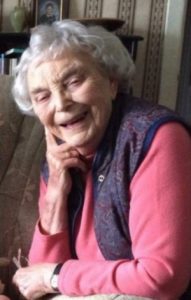 Apart from a period when her children were small she had been a councillor for over 50 years. One Penisarwaun resident said many villagers could not remember a time when Mrs Larsen was not their councillor.







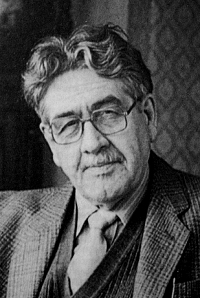 This year marks the centenary of the birth of one of Plaid Cymru’s most eminent Vie-Presidents, Dr Tudur Jones, who held the office from 1957 to 1964. As Vice-President, he provided Gwynfor with active support in public and invaluable advice in private. Living in Bangor, he was also in regular touch with General Secretary, Elwyn Roberts, who was based in the Bangor office. The three, Gwynfor, Tudur and Elwyn, were very much on the same wavelength, representing a nationalism that arose from a deep commitment to the Welsh language and that was firmly based on Christian values. As it happens, all three were Congregationalists. In the nineteen-sixties the Welsh Congregationalist Union resolved to support self-government for Wales, famously declaring that Wales’s problem was that it was too far from God and too near to England!
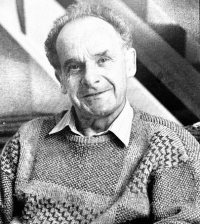 It is with great sadness that we heard of the death of Maldwyn at the age of 93 on April 9 2021 following a short illness.